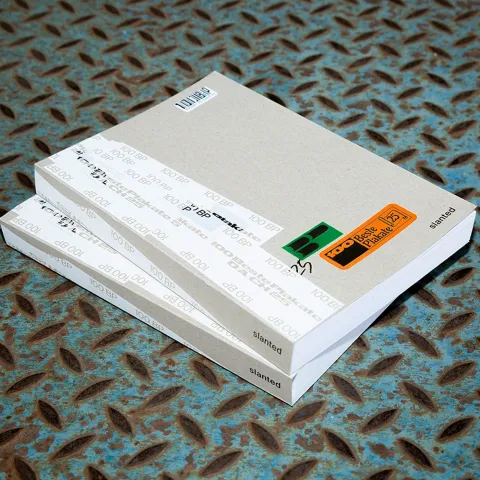
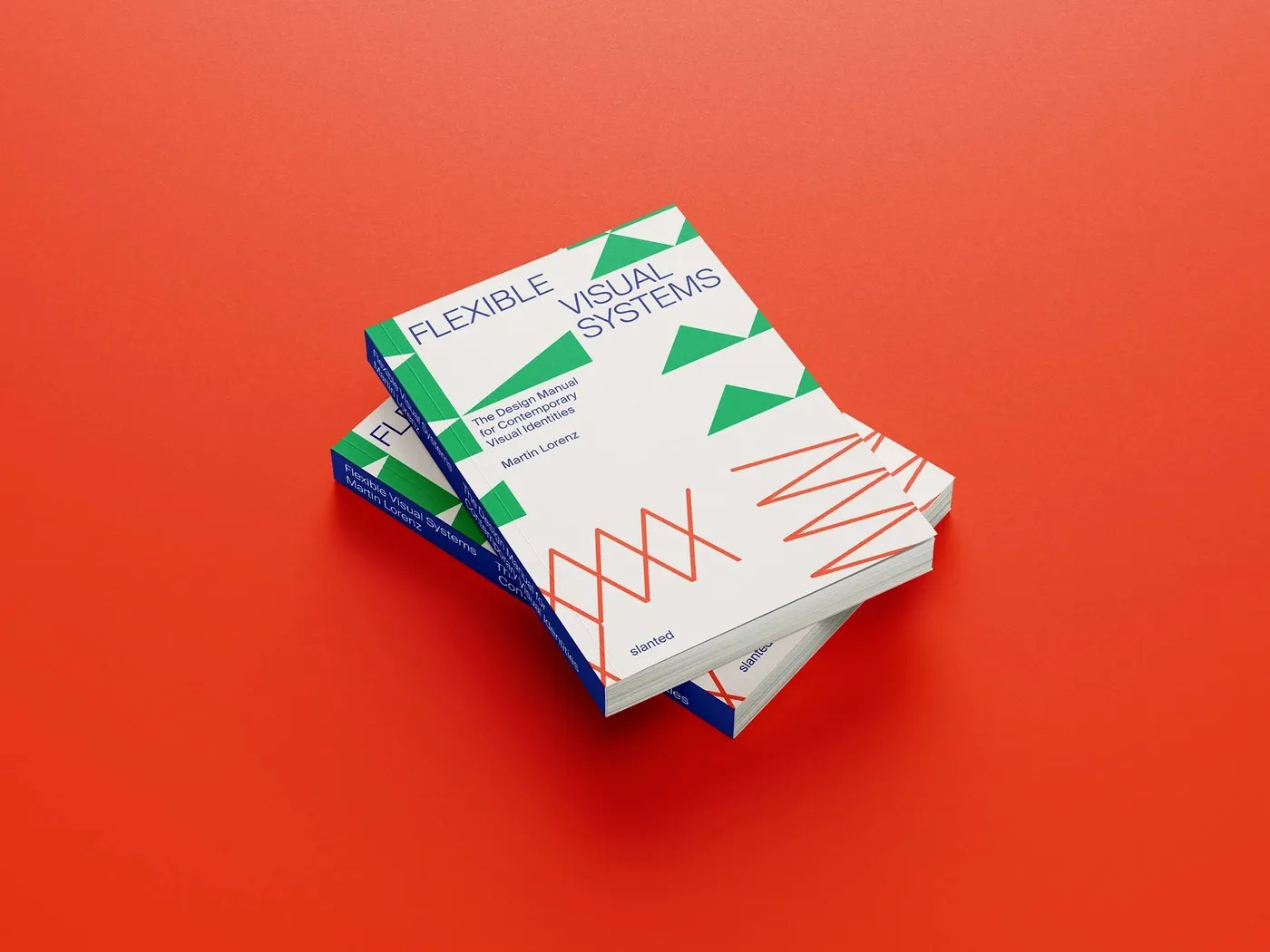
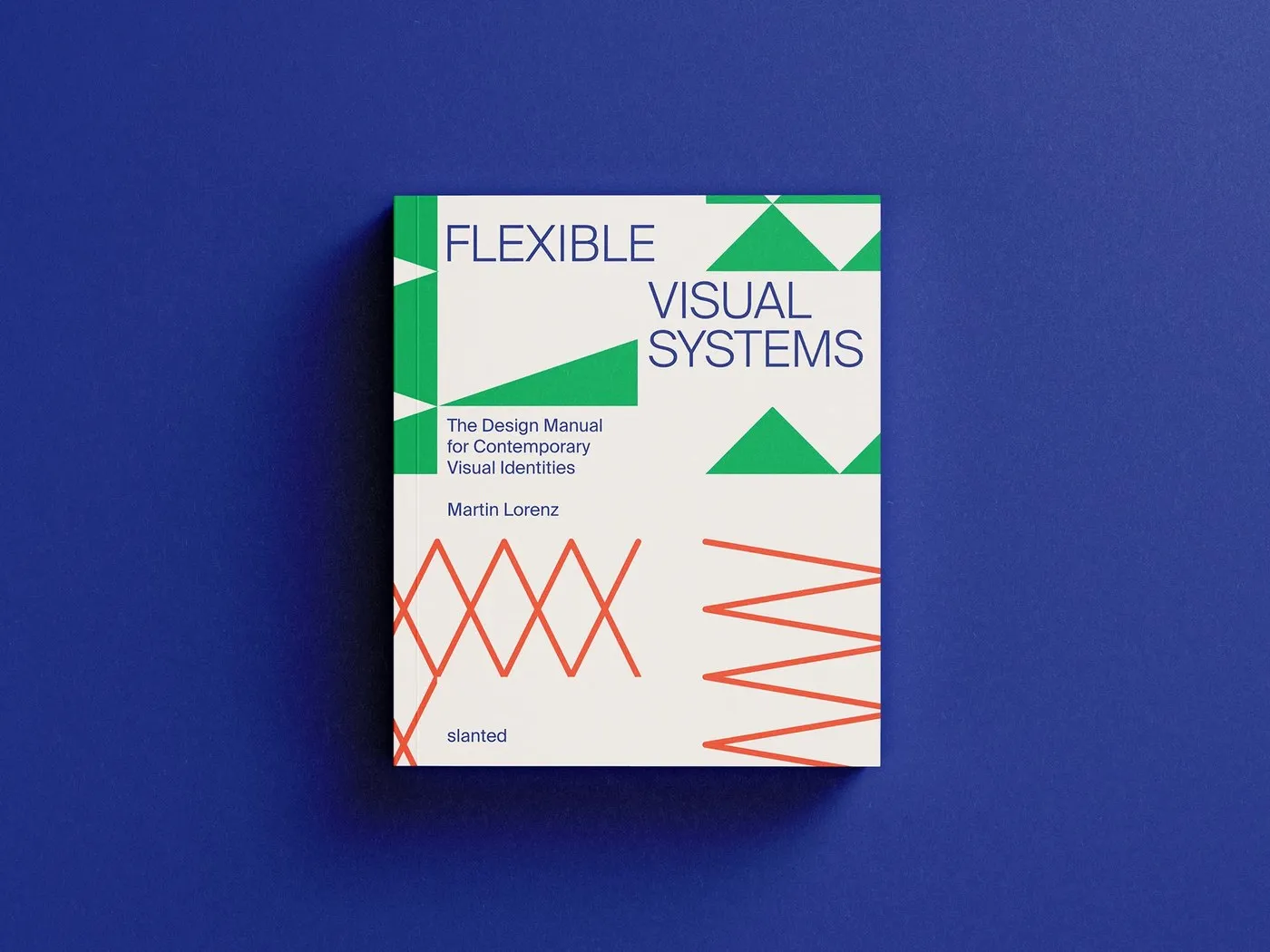
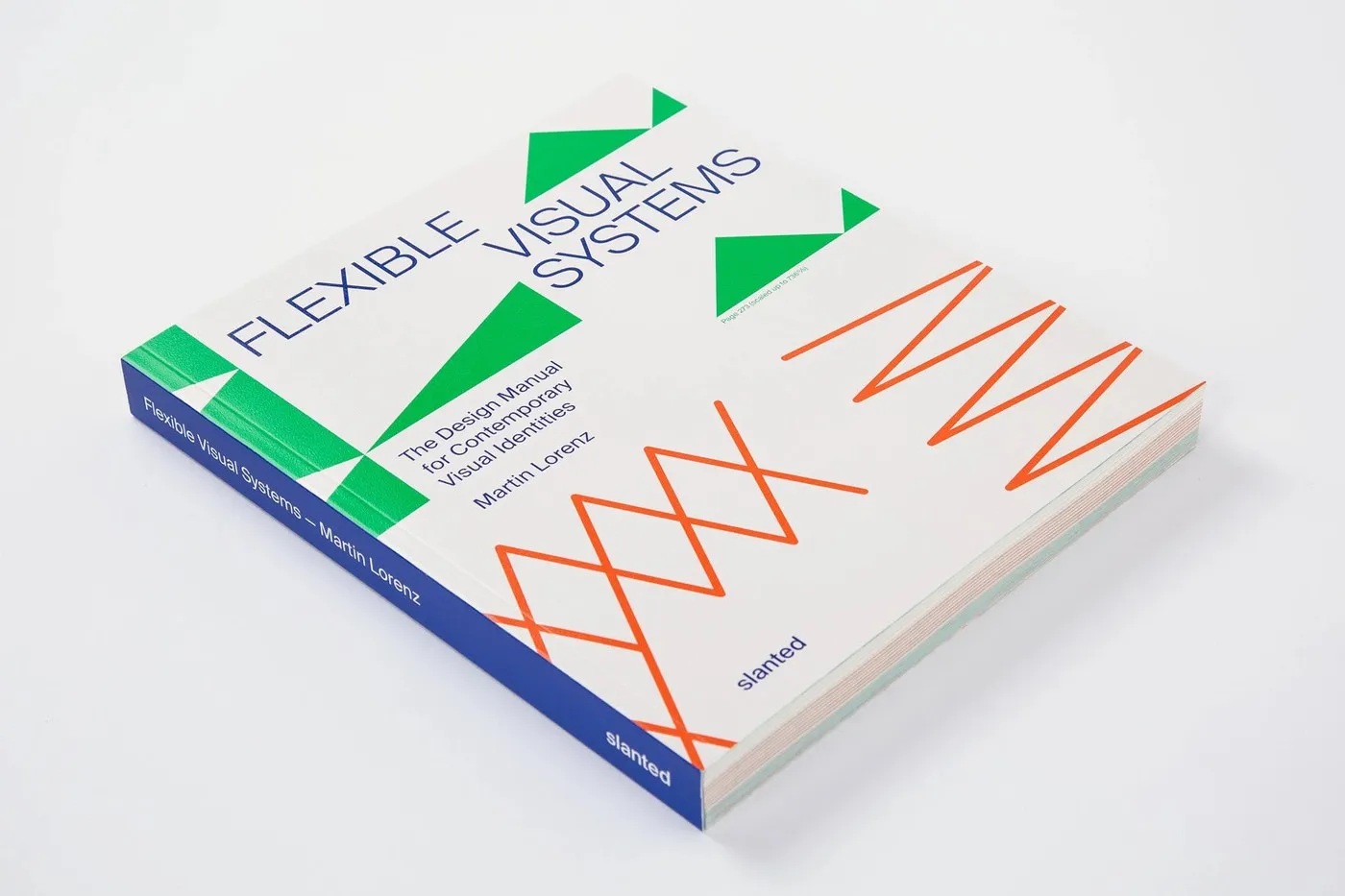
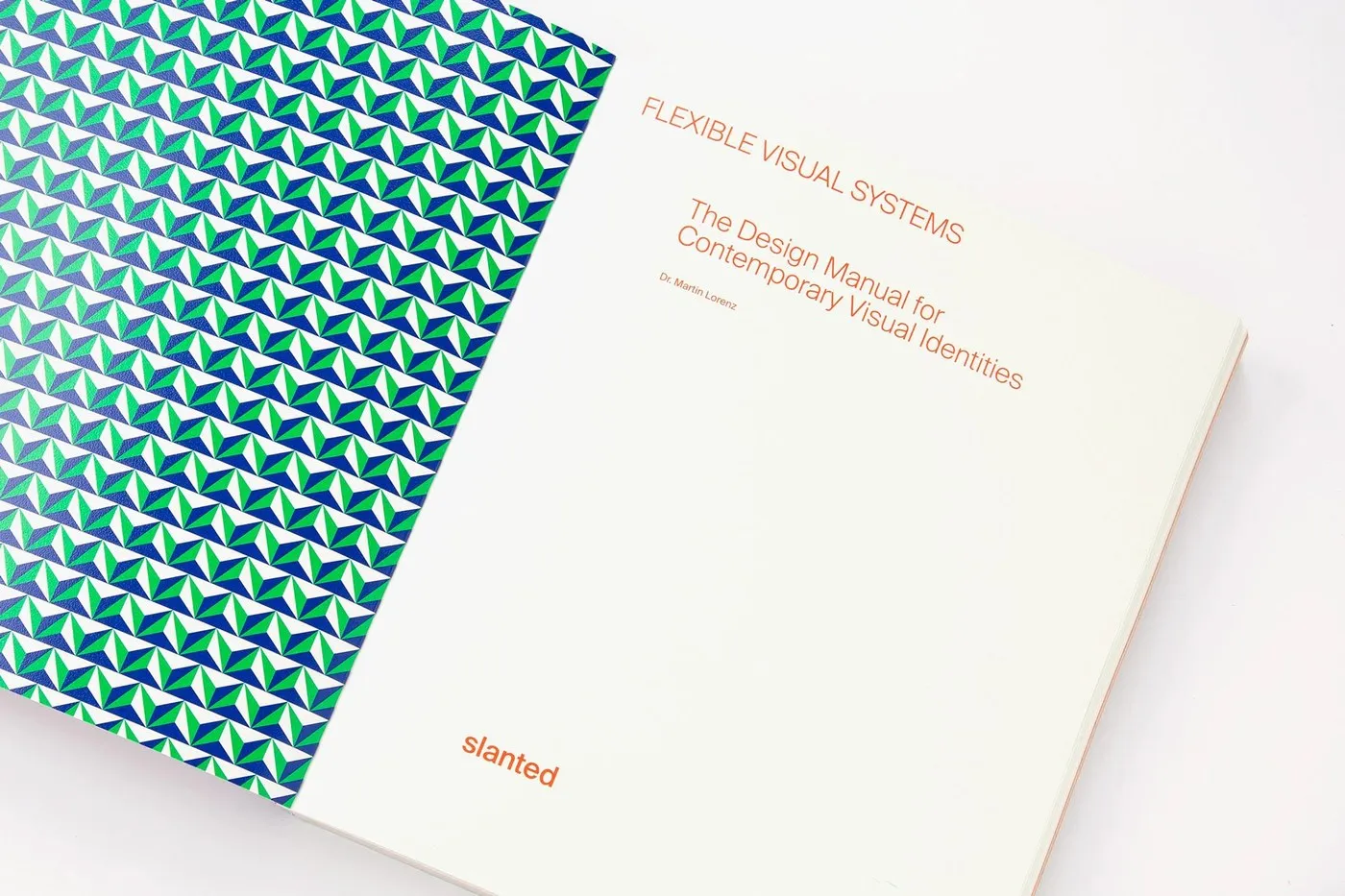
Flexible Visual Systems by twopoints.net: The Ultimate Manual for Dynamic Visual Identities Clocking in at 320 pages, “Flexible Visual Systems” by Dr. Martin Lorenz from twopoints.net distills two decades of system-building expertise into a masterfully structured manual. Published by Slanted Publishers and printed by Agpograf in Barcelona, this 210 x 250 mm volume sports an amazingly bold color palette.
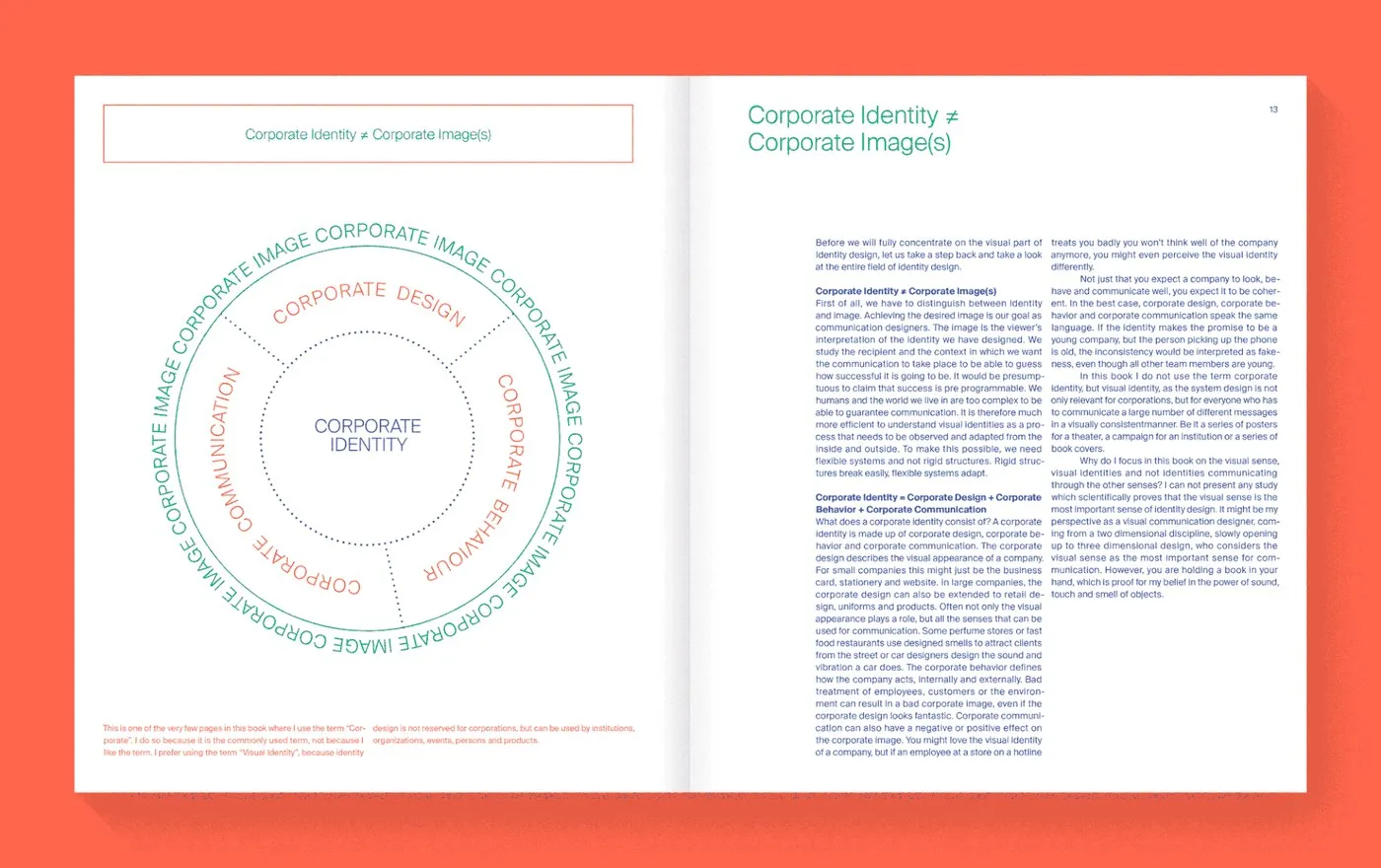
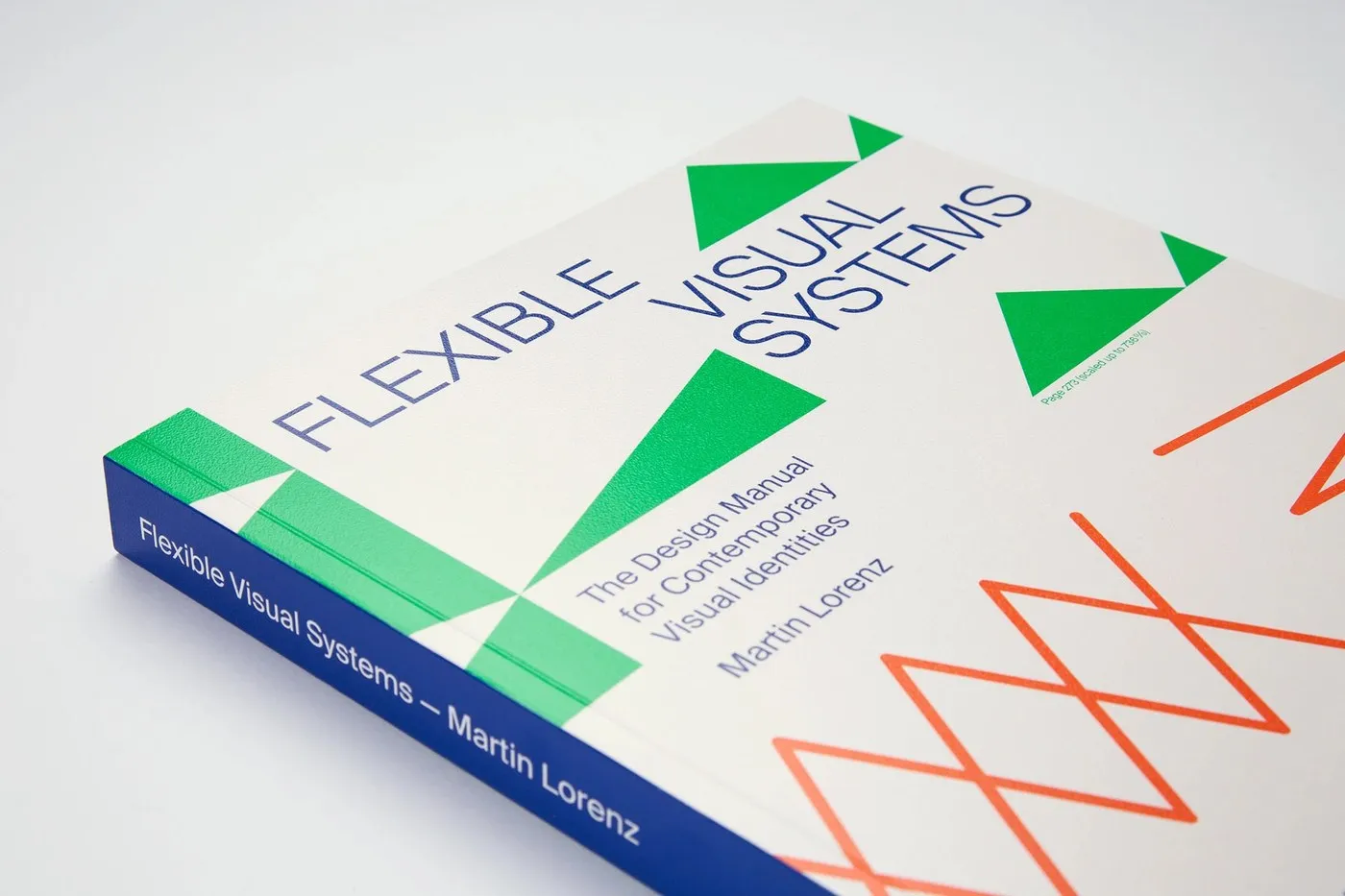
In terms of print technique and materials, the softcover uses Creator Sand 300 gsm paper with a matte varnish, creating striking visual contrast with three vivid Pantone shades: emerald green, neon vermilion, and cobalt blue. On the inside, 120 gsm Coral Natural paper holds ink wonderfully, making geometric diagrams, modular grids, and typography look ultra-sharp. Agpograf handled both the cover and interior using exclusively these three spot colors instead of standard four-color CMYK. On top of that, lay-flat binding allows spreads to lay completely open without losing details in the spine!
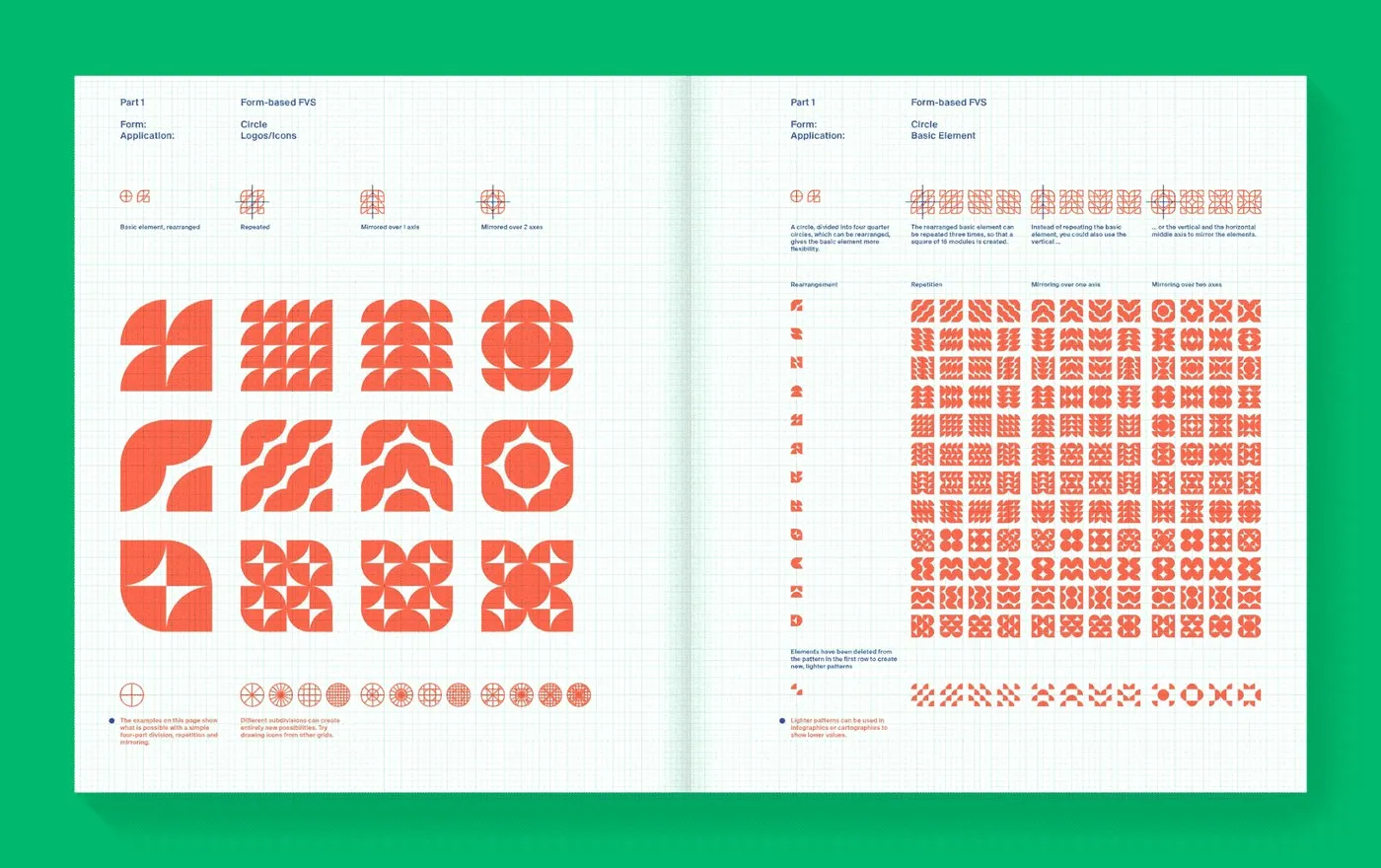
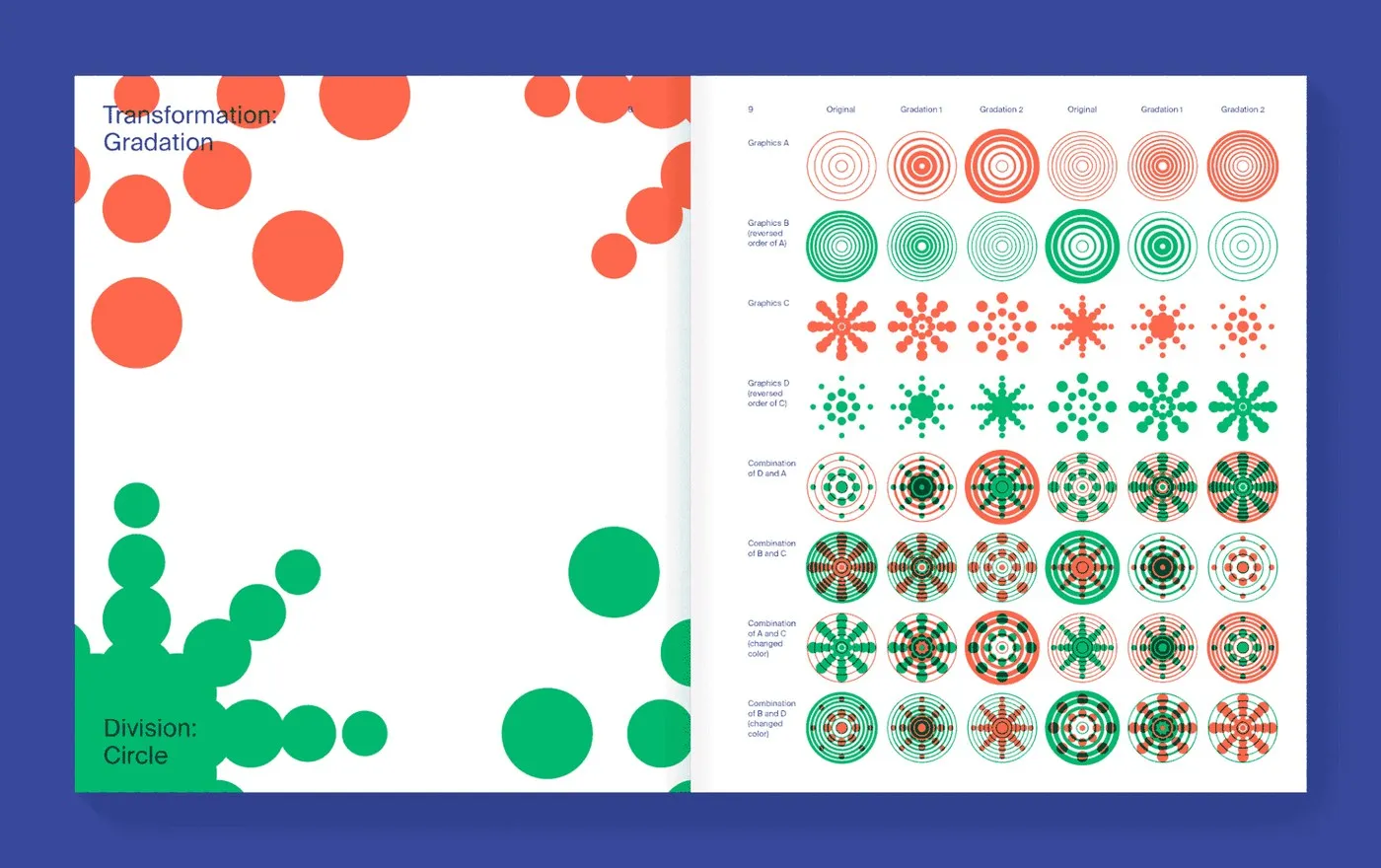
The interior layout is split into three distinct sections. The opening 82 pages dive into the theory and history of flexible systems. The second section spans 148 pages of hands-on exercises built around five core geometric shapes: circles, triangles, squares, pentagons, and hexagons. Pages in this section rely on strict typographic columns paired with modular grids, where diagrams and glyphs rotate, flip, and divide seamlessly across the baseline grid while maintaining optical balance. Blue header and margin coordinates keep everything anchored, freeing up space to showcase shape variations. Finally, the transformation section covers color gradations and motion frameworks designed for generative work.
Instead of just walking through standard case studies, the book jumps straight into constructing brand identities from the most basic geometric components. It serves as a fantastic practical resource that links systemic design theory directly to real-world execution.
Check out the full project on Behance via twopoints.net.
Flexible Visual Systems của twopoints.net: Cẩm Nang Thiết Kế Hệ Thống Nhận Diện Linh Hoạt
Cuốn sách “Flexible Visual Systems” dày 320 trang do Tiến sĩ Martin Lorenz từ studio twopoints.net thực hiện là một công trình đúc kết hai thập kỷ làm nghề thành bộ quy chuẩn thiết kế hệ thống cực kỳ bài bản. Tác phẩm do Slanted Publishers xuất bản và nhà in Agpograf tại Barcelona đảm nhận khâu in ấn, sở hữu kích thước 210 x 250 mm cùng bảng màu vô cùng ấn tượng.
Về mặt chất liệu và kỹ thuật in, phần bìa mềm sử dụng giấy Creator Sand 300 gsm phủ varnish mờ, tạo sự tương phản thị giác mạnh mẽ giữa ba sắc độ Pantone: xanh ngọc bảo (emerald green), đỏ cam neon (neon vermilion) và xanh cô-ban (cobalt blue). Ruột sách chọn dòng giấy Coral Natural 120 gsm bám mực tốt, giúp các sơ đồ hình học, hệ thống lưới modular và phần typography hiển thị sắc nét. Nhà in Agpograf đã xử lý toàn bộ bìa và các trang trong bằng đúng 3 màu spot color nguyên bản chứ không dùng hệ màu CMYK 4 màu thông thường. Ngoài ra, kỹ thuật đóng gáy mở phẳng (lay-flat) giúp các dàn trang đôi (spread) mở ra hoàn toàn mà không bị mất chi tiết ở phần gáy sách.
Bố cục bên trong được chia làm ba phần rõ ràng. 82 trang đầu tiên dành cho lý thuyết và lịch sử phát triển của các hệ thống linh hoạt (flexible systems). Phần thứ hai kéo dài 148 trang hướng dẫn thực hành xoay quanh 5 hình khối cốt lõi: hình tròn, tam giác, hình vuông, ngũ giác và lục giác. Cấu trúc trang ở phần này áp dụng các cột typographic chặt chẽ cùng lưới tọa độ modular. Các biểu đồ và glyphs được xoay, lật, chia nhỏ linh hoạt trên lưới baseline mà vẫn giữ nguyên sự cân bằng thị giác. Phần chữ hướng dẫn màu xanh blue đặt ở running header và tọa độ lề giúp cố định bố cục, nhường không gian cho việc phân loại hình khối. Cuối cùng là phần biến đổi (transformation), giới thiệu các công thức chuyển màu (gradation) và khung chuyển động (motion framework) dành cho thiết kế ngẫu nhiên/tự động (generative design).
Thay vì chỉ đưa ra các dự án mẫu (case study) thông thường, cuốn sách đi thẳng vào việc hướng dẫn tạo dựng nhận diện thương hiệu từ những yếu tố hình học sơ khai nhất. Đây là một tài liệu thực hành hoàn hảo, kết nối giữa lý thuyết thiết kế hệ thống và sản xuất thực tế.
Xem đầy đủ dự án trên Behance tại twopoints.net.