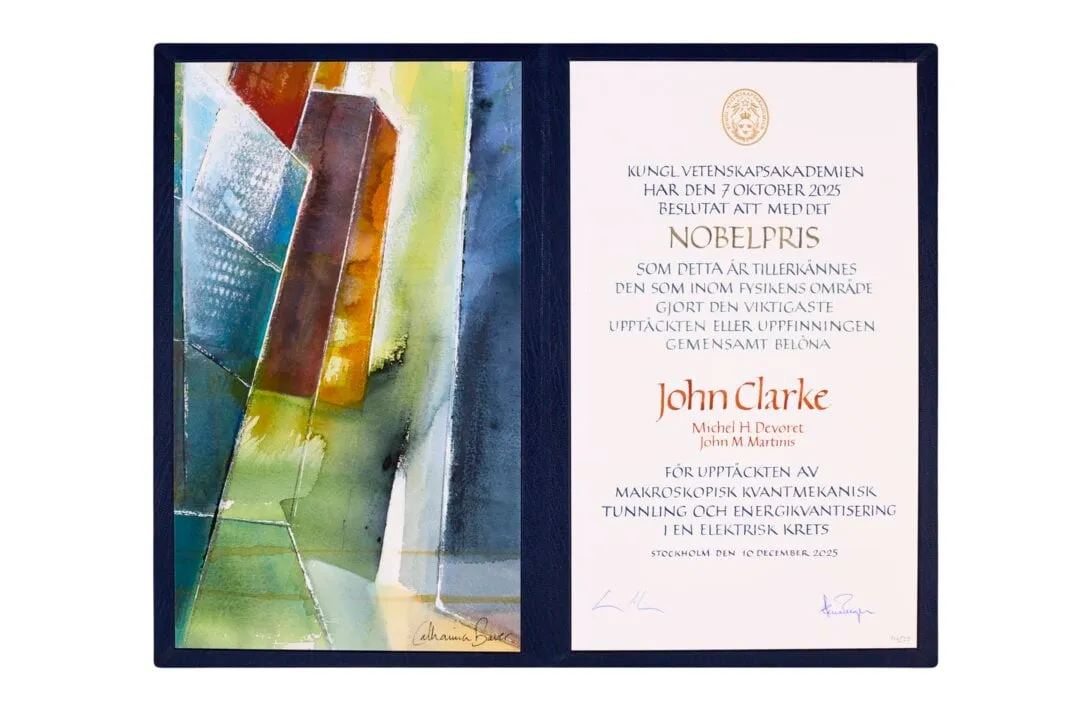
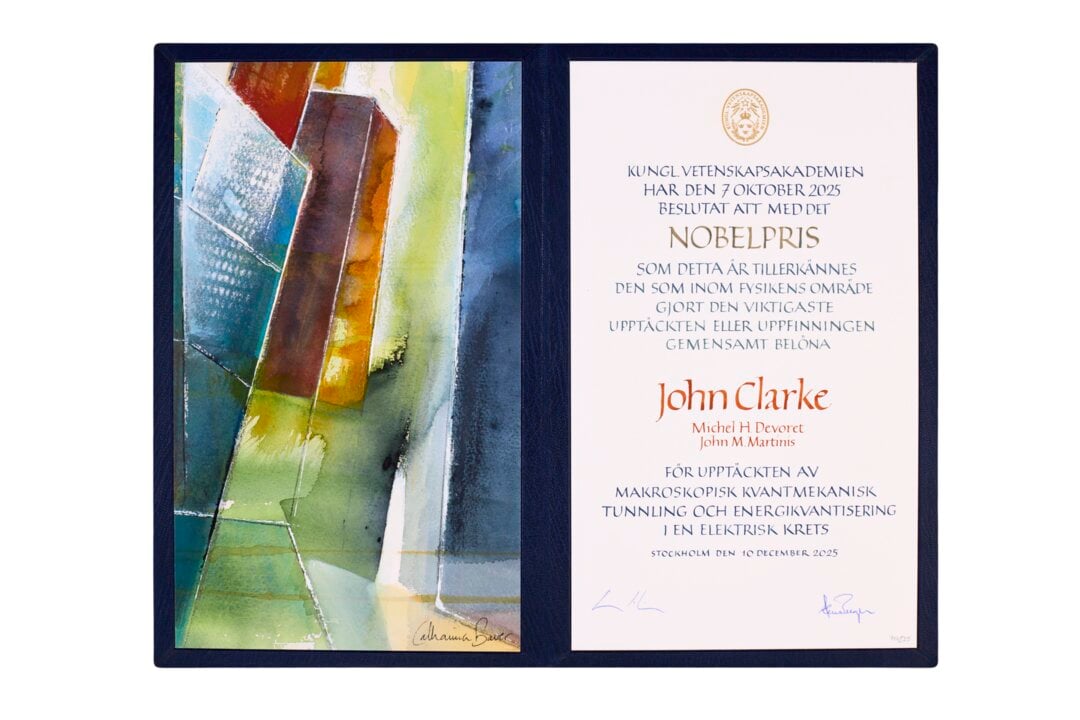
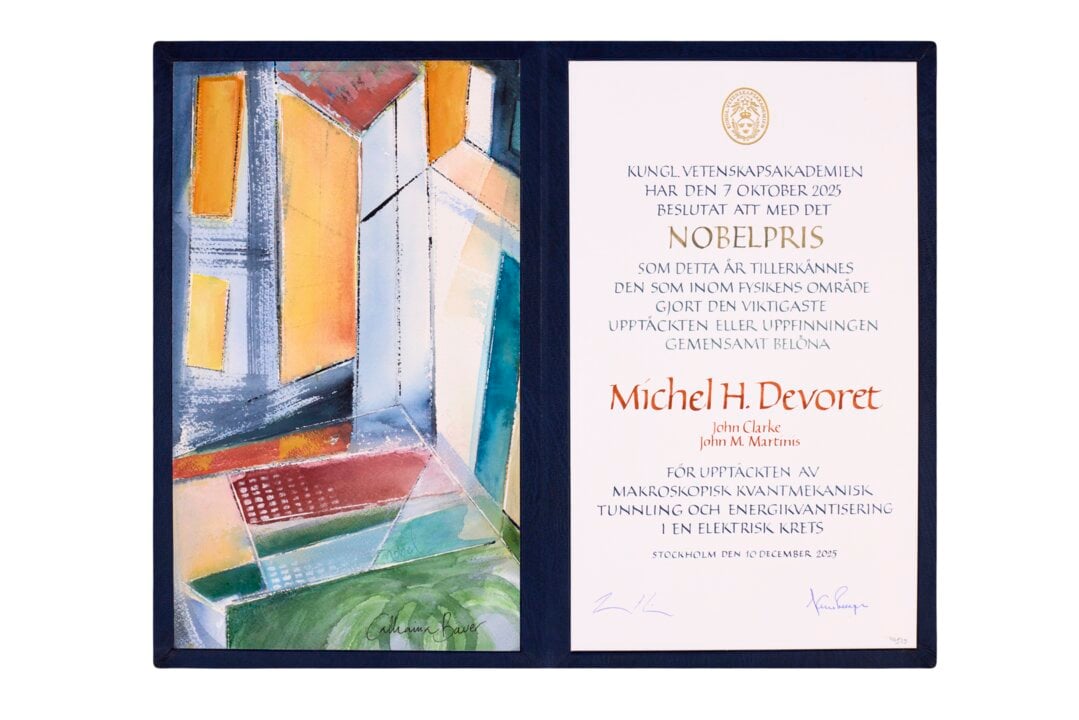
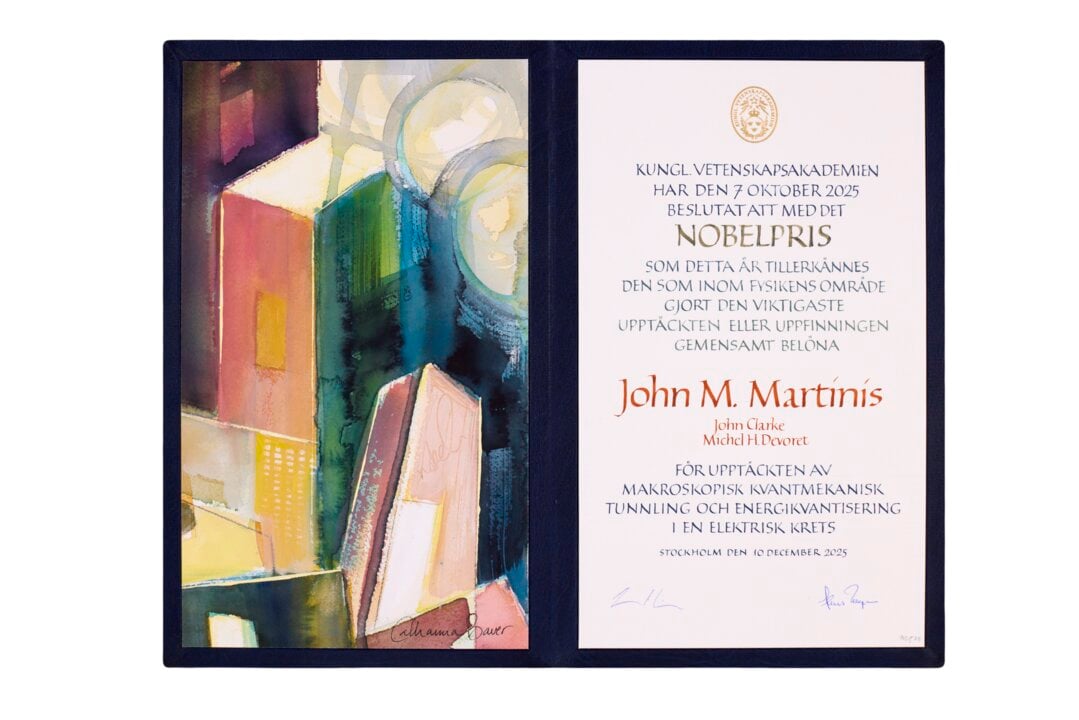
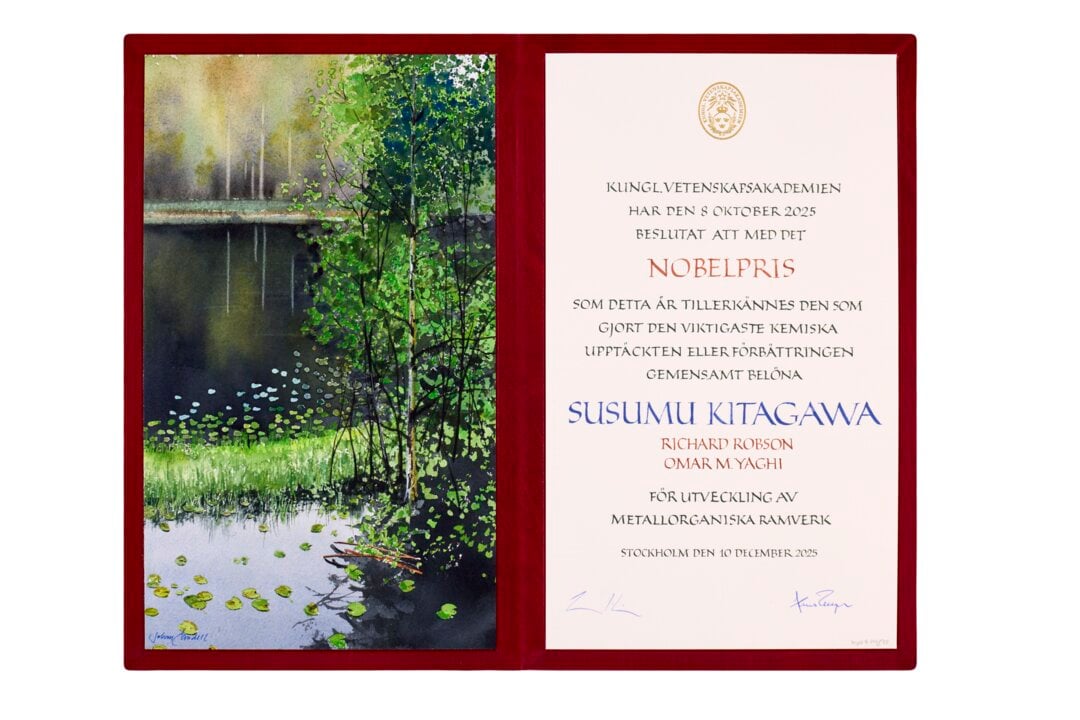
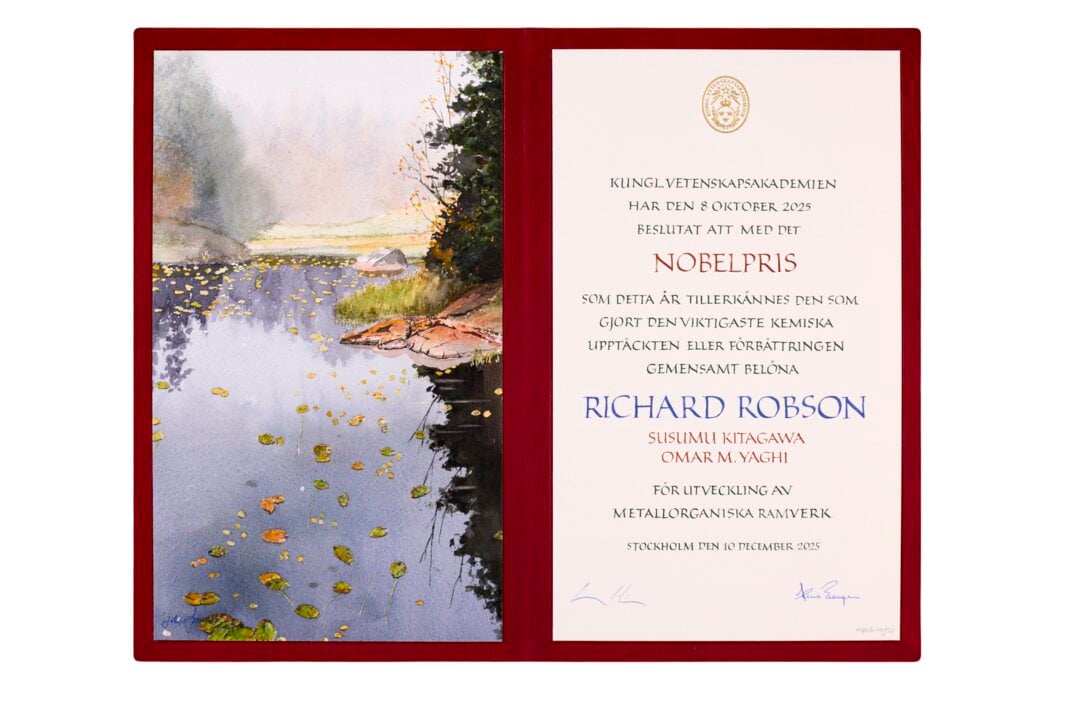
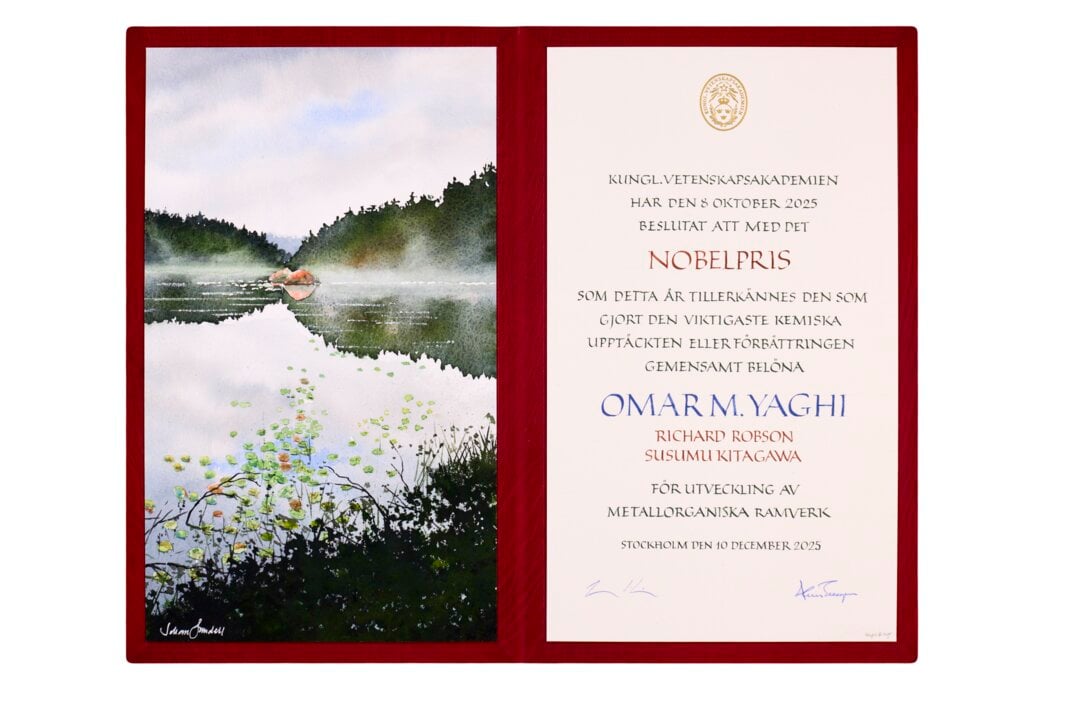
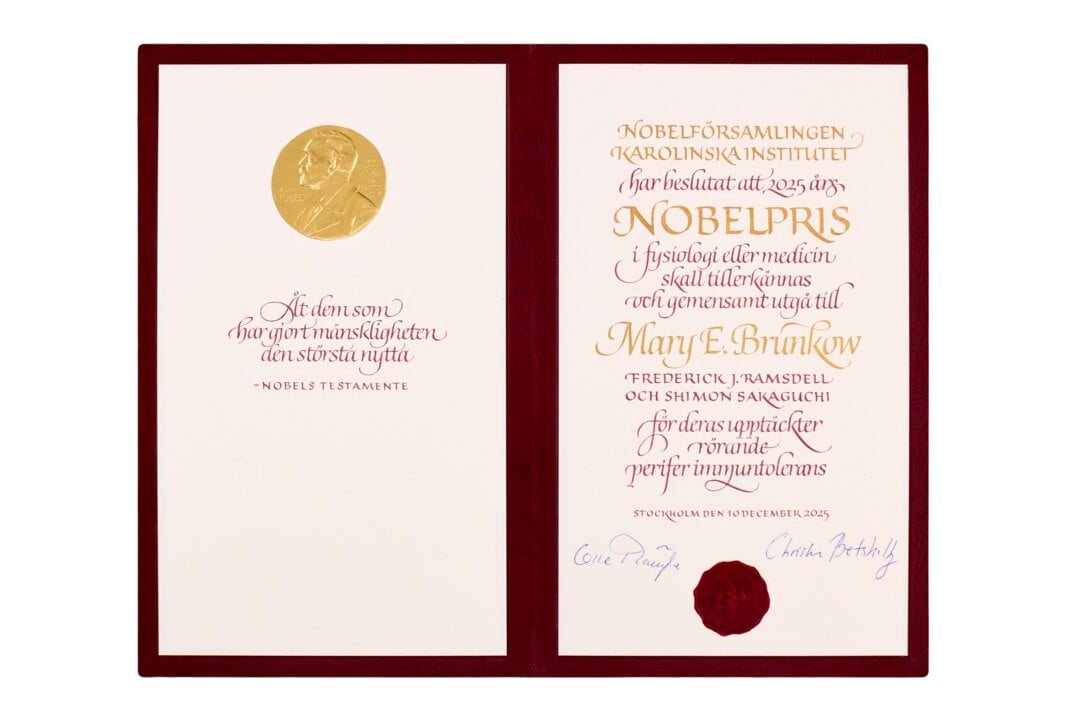
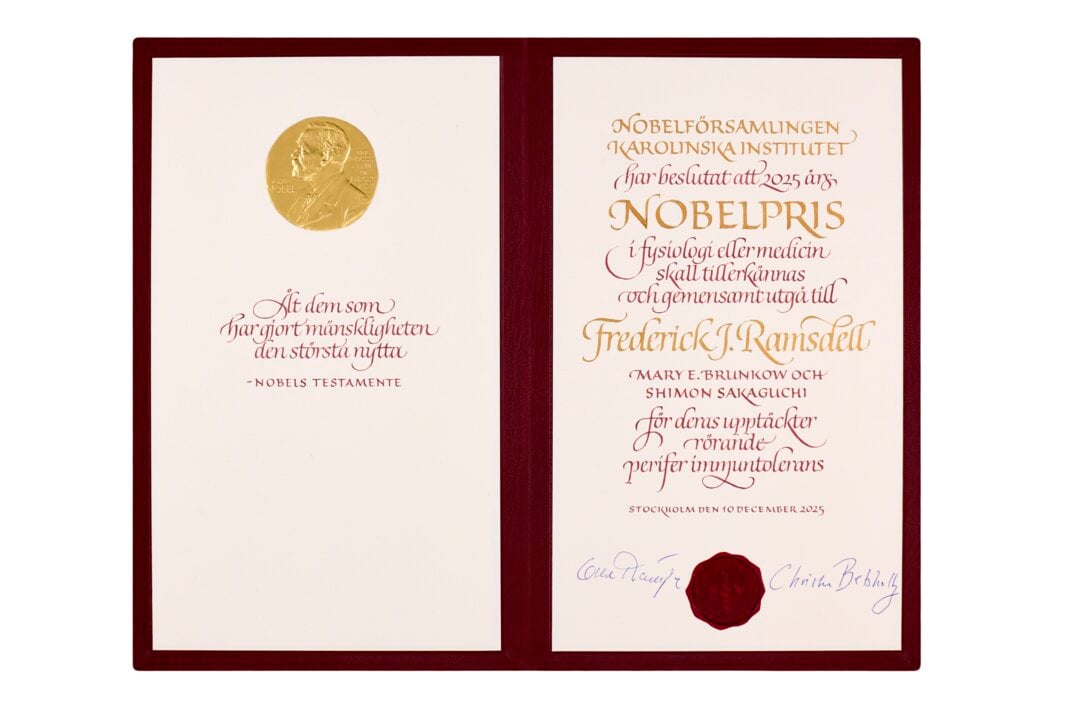
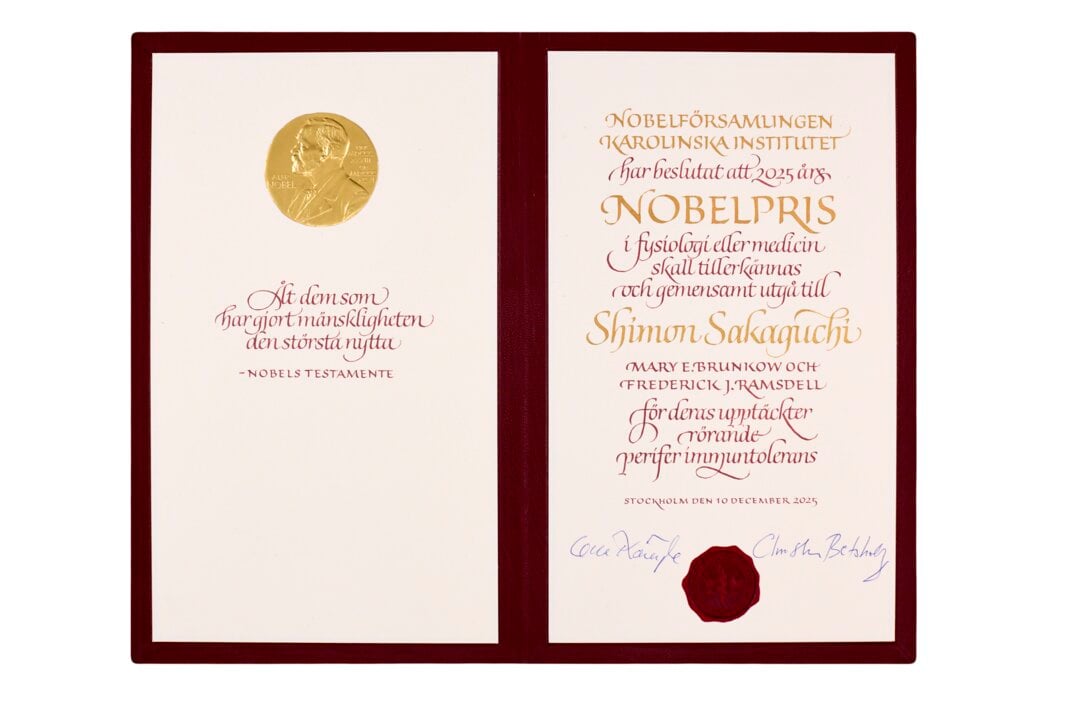
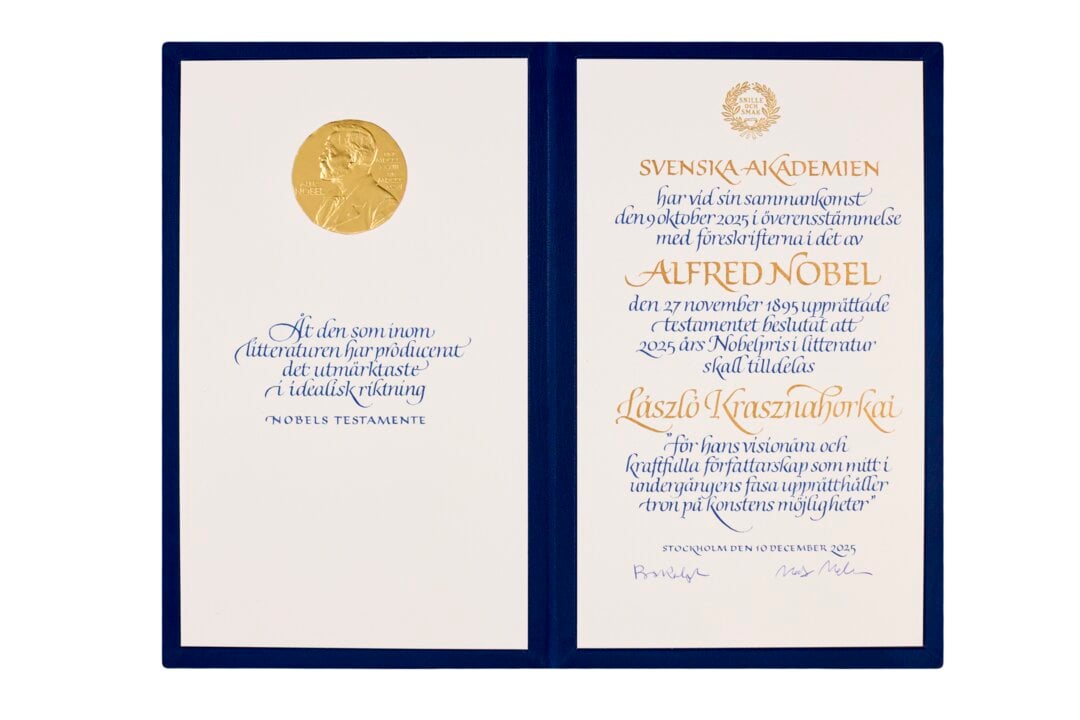
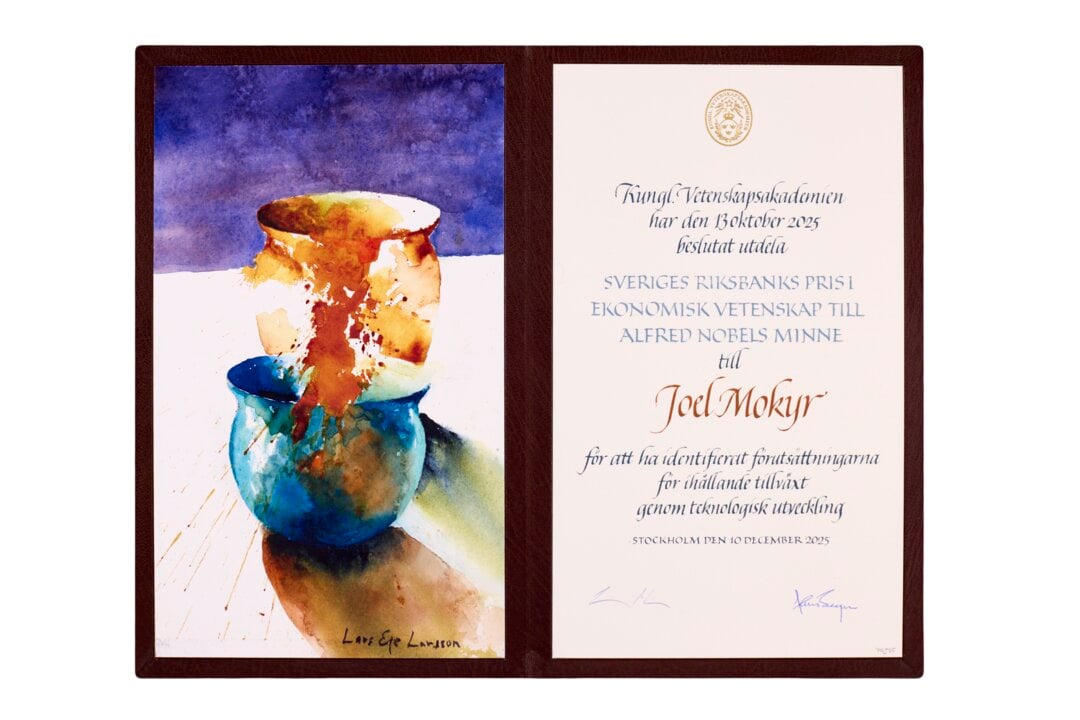
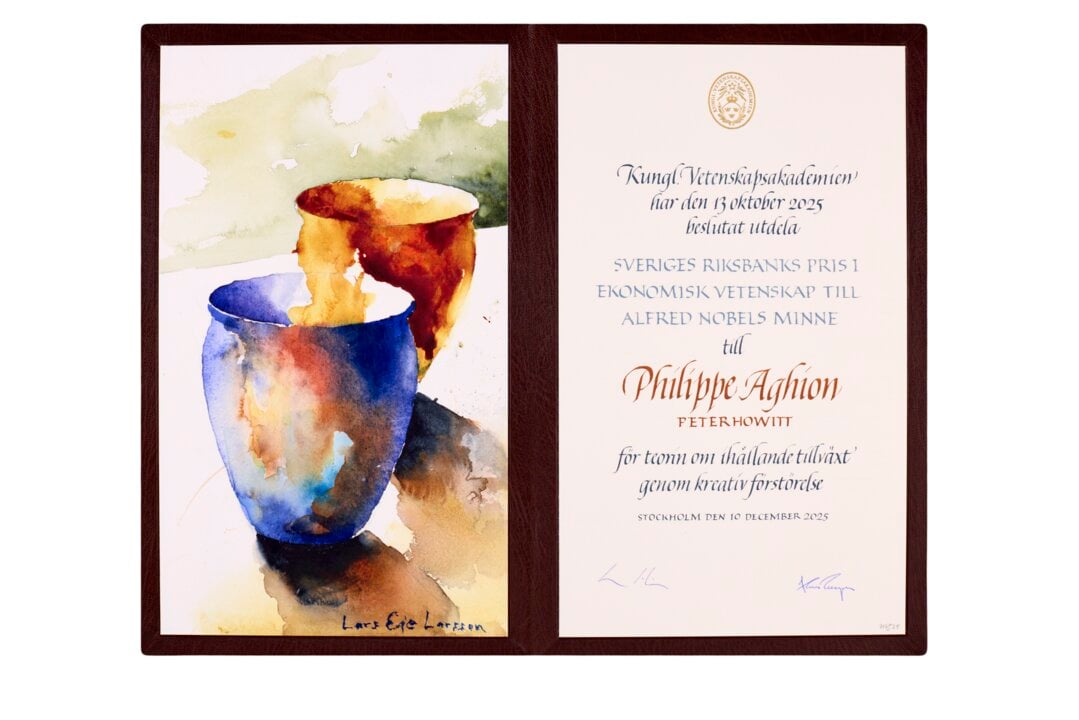
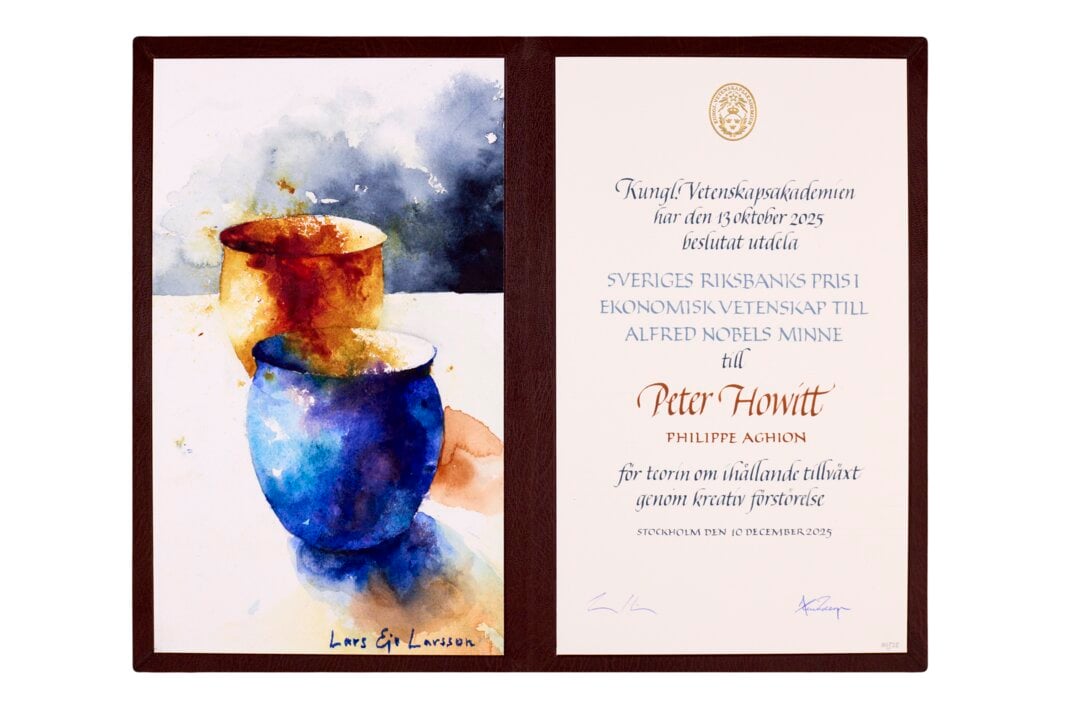
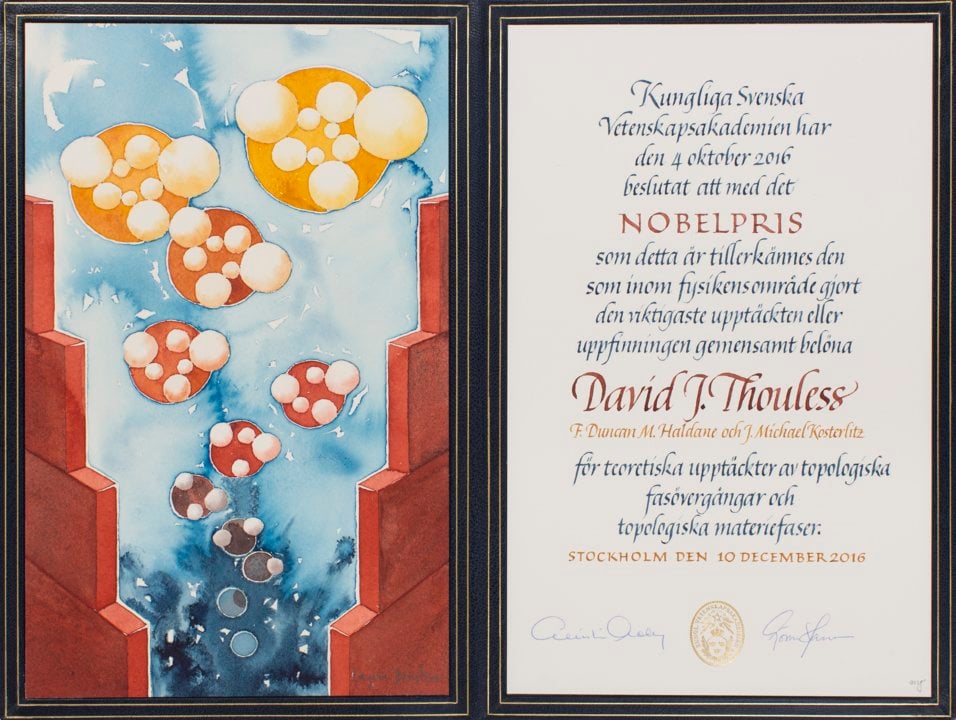
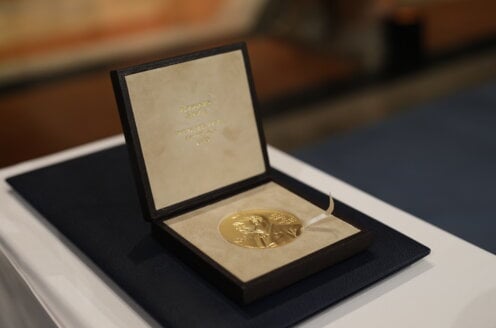
Mỗi tấm bằng giải Nobel không đơn thuần là một tờ giấy chứng nhận, mà thực sự là một tác phẩm nghệ thuật độc bản được may đo riêng biệt. Quy chuẩn thiết kế của từng tấm bằng sẽ do chính các cơ quan trao giải quyết định. Chẳng hạn, bằng dành cho giải Văn học sẽ được viết trên giấy da (loại da thuộc xử lý đặc biệt) bằng kỹ thuật thủ công tương tự như các họa sĩ minh họa sách thời trung cổ. Trong khi đó, bằng của các hạng mục giải thưởng khác lại được thực hiện trên loại giấy handmade đặt hàng riêng.
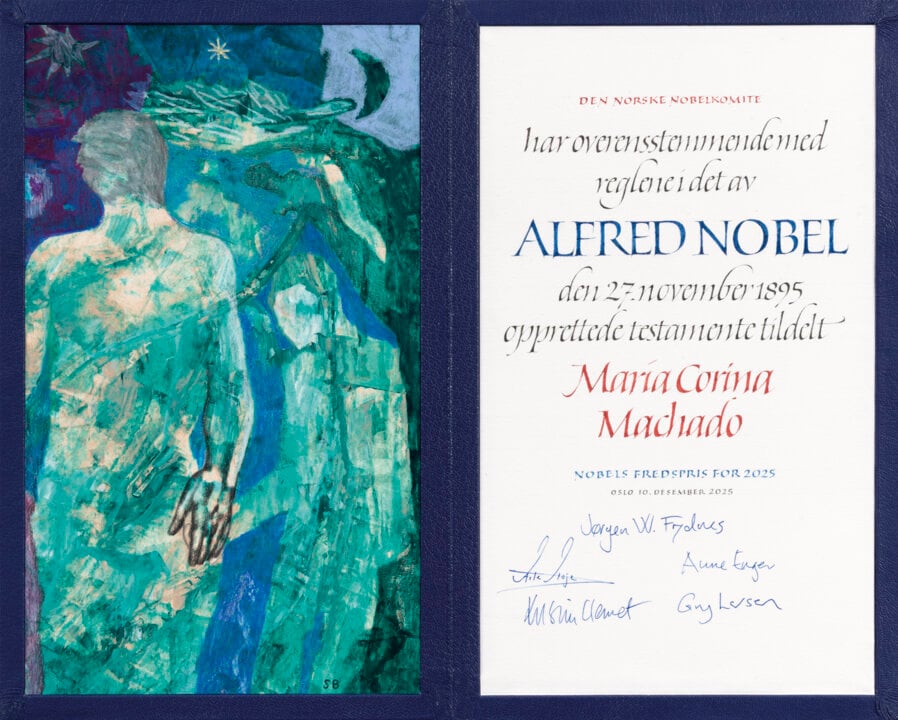
Dưới góc độ mỹ thuật, phong cách thiết kế của các tấm bằng có thể thay đổi và làm mới qua từng năm, nhưng phần nội dung chữ viết (typography) luôn tuân thủ một khuôn mẫu thống nhất bằng tiếng Thụy Điển hoặc tiếng Na Uy. Các tấm bằng do Thụy Điển trao tặng sẽ ghi rõ tên người nhận kèm một đoạn trích dẫn ngắn (citation) giải thích lý do họ được vinh danh. Ngược lại, bằng Nobel Hòa bình do Na Uy trao tặng lại chưa bao giờ bao gồm phần trích dẫn này.
Sự chỉn chu và kỹ lưỡng trong khâu hoàn thiện (finishing) còn được thể hiện qua chất liệu bìa bọc. Phần phù điêu Nobel trên bằng giải Sinh học hoặc Y học được làm hoàn toàn bằng da và gắn trực tiếp lên bề mặt. Sau các công đoạn chuẩn bị kỹ càng, thợ đóng sách sẽ tiến hành bọc tấm bằng trong một lớp da dê cao cấp. Màu sắc của lớp vỏ da này được quy định rất rõ ràng cho từng chuyên ngành:
- Vật lý: Vỏ da màu xanh dương đậm (dark blue)
- Hóa học: Vỏ da màu đỏ (red)
- Sinh học hoặc Y học: Vỏ da màu đỏ burgundy
- Kinh tế: Vỏ da màu nâu đậm (dark brown)
- Văn học: Vỏ da màu xanh dương (blue)
Không dừng lại ở đó, các nghệ sĩ thư pháp (calligrapher) còn thiết kế các chữ lồng bằng vàng (gold monogram) độc quyền cho từng người đạt giải ở mặt ngoài của tấm bằng lẫn trên hộp đựng. Những chiếc hộp bảo quan này đều được làm từ bìa cứng dệt màu xám và lót một lớp da lộn heo êm ái bên trong. Kích thước tiêu chuẩn của mỗi tấm bằng Nobel là 23 x 35 cm.
Nhìn vào lịch sử thiết kế của các đơn vị trao giải, có thể thấy những tư duy sáng tạo rất riêng biệt:
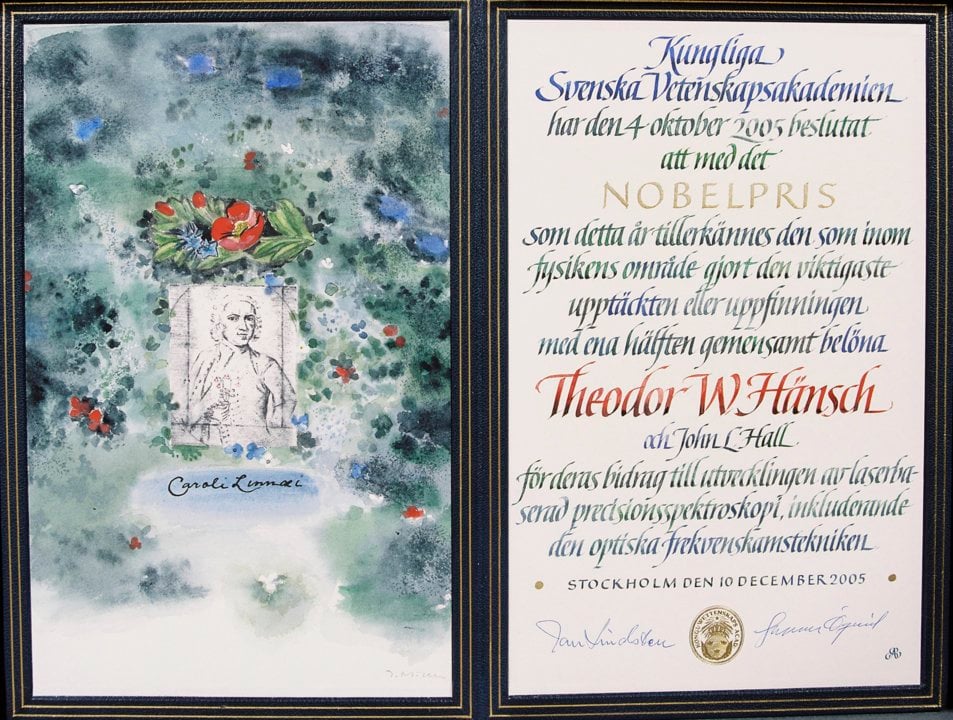
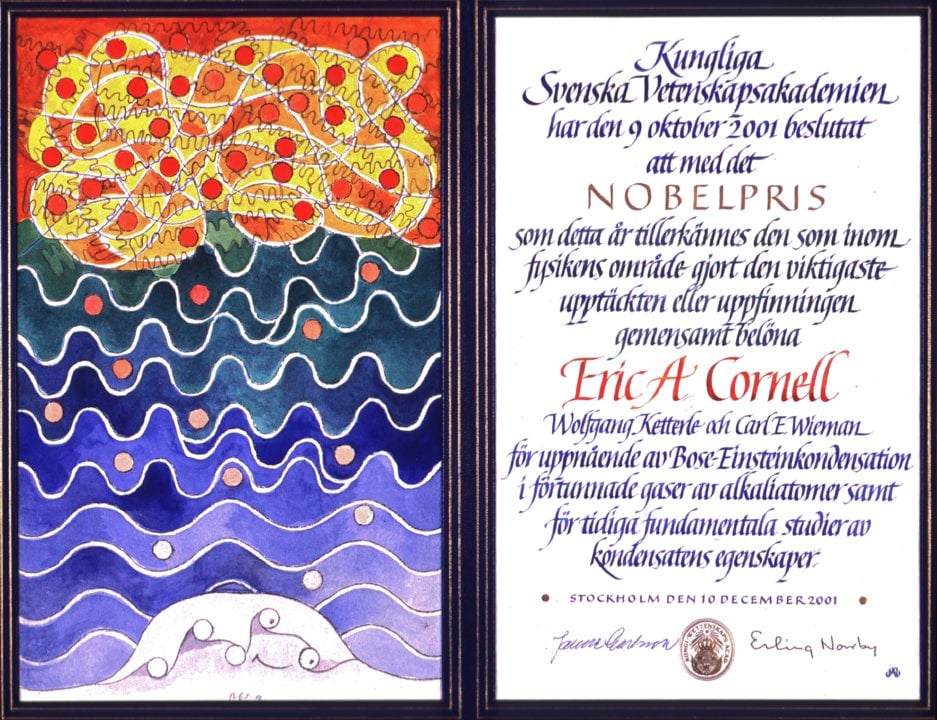
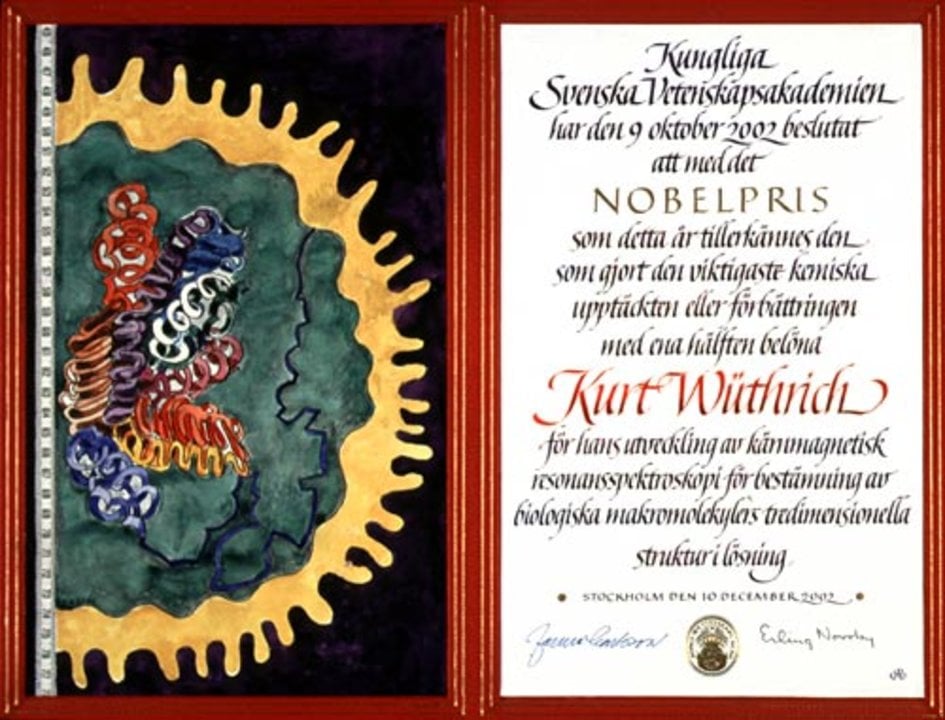
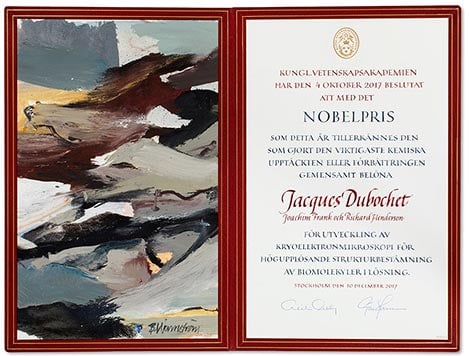
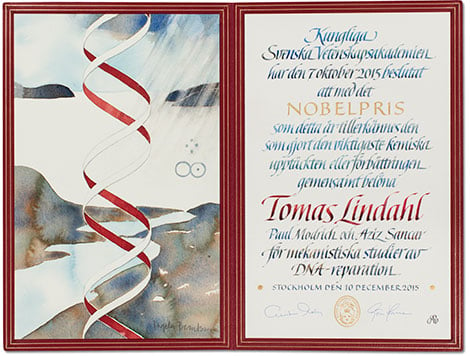
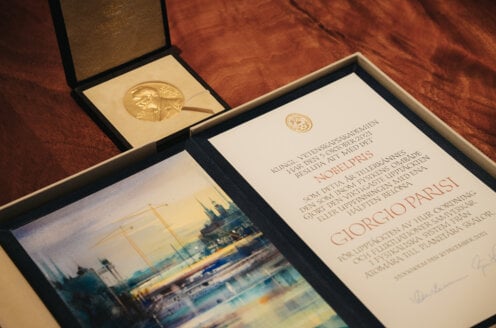
Học viện Khoa học Hoàng gia Thụy Điển chịu trách nhiệm cho các văn bằng thuộc ngành Vật lý, Hóa học và từ năm 1969 là cả ngành Kinh tế. Xu hướng thiết kế ở đây thường chọn một chủ đề chung theo năm – như chim chóc, hoa lá hay bình gốm – thay vì cá nhân hóa theo từng người nhận. Kể từ năm 1988, toàn bộ phần chữ viết tay trên các tấm bằng này đều do nghệ sĩ thư pháp nổi tiếng Annika Rücker đảm nhiệm. Một số tác phẩm nổi bật có thể kể đến tấm bằng của David J. Thouless (2015, họa sĩ Ingela Berntsson), Theodor W. Hänsch (2005, họa sĩ Ingegerd Möller), Eric Cornell (2001, họa sĩ Nils G. Stenqvist), hay các tấm bằng ngành Hóa học của Kurt Wüthrich (2002), Jacques Dubochet và Tomas Lindahl.
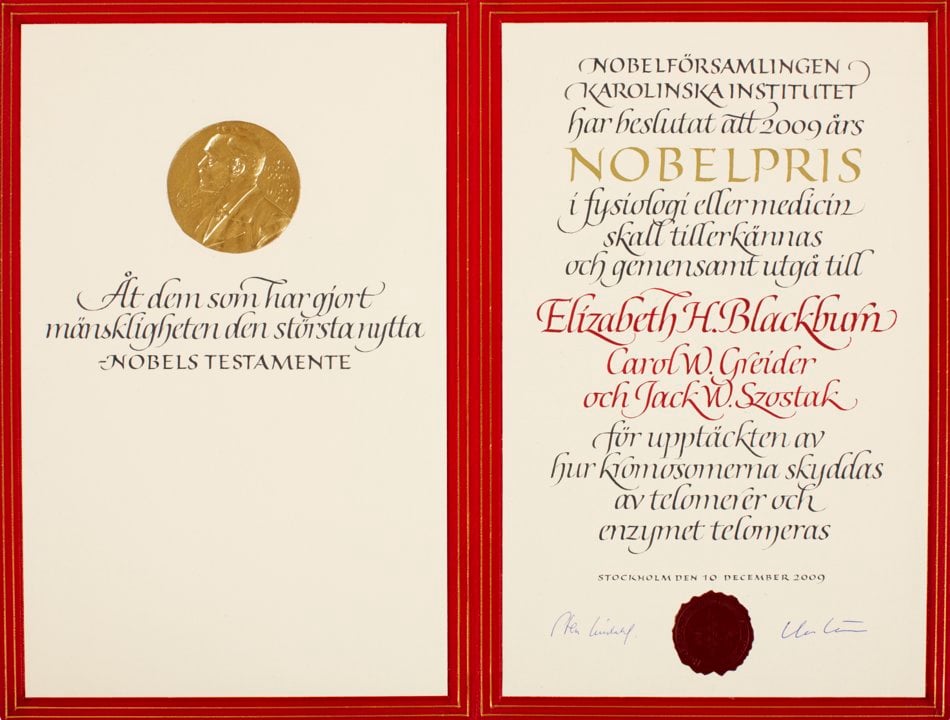
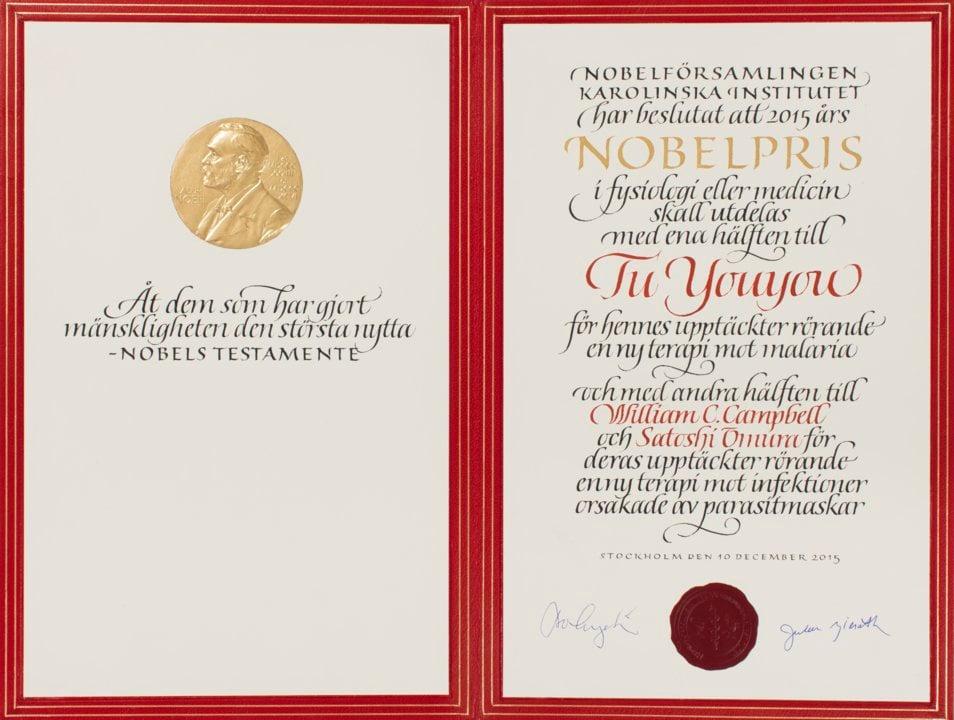
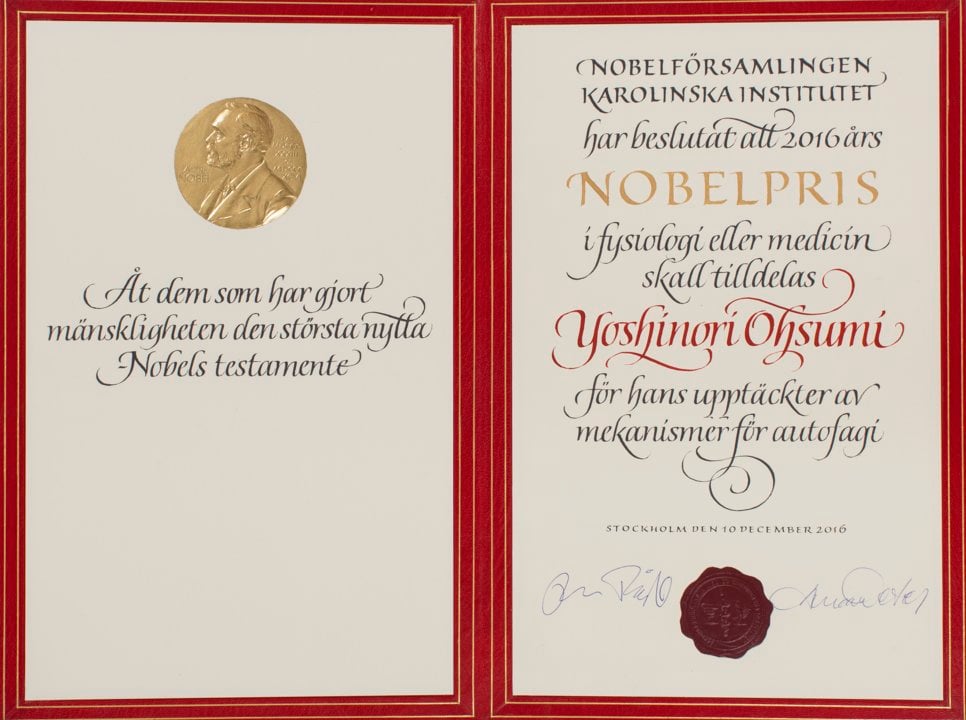
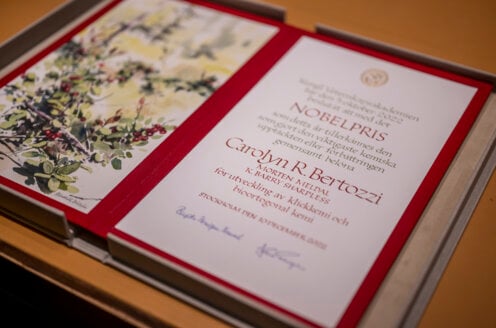
Hội đồng Nobel tại Viện Karolinska là đơn vị phụ trách bằng Sinh học hoặc Y học. Nếu như trong giai đoạn 1901-1964, những tấm bằng này ngập tràn các họa tiết hội họa phong phú thì từ năm 1965, phần trang trí đã được tinh giản lại, chỉ gồm một huy chương vàng dập nổi đi kèm phần chữ thư pháp trang nhã. Từ năm 1990 đến nay, phần chữ này đều do nghệ sĩ thư pháp Susan Duvnäs thể hiện, tiêu biểu như trên bằng của Elizabeth H. Blackburn (2009), Tu Youyou (2015) và Yoshinori Ohsumi (2016).
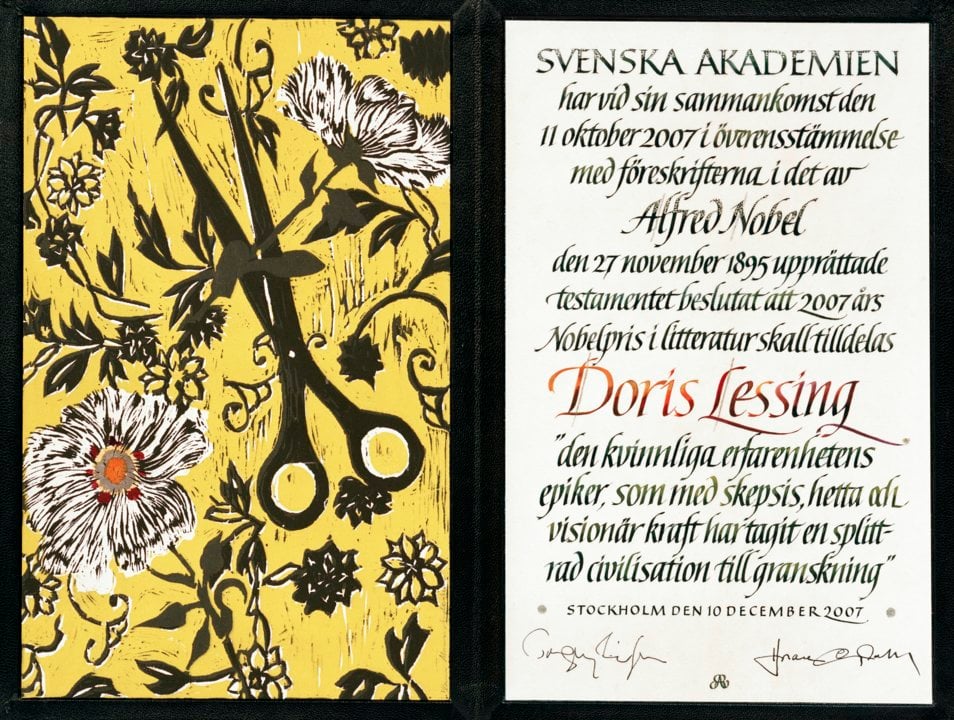
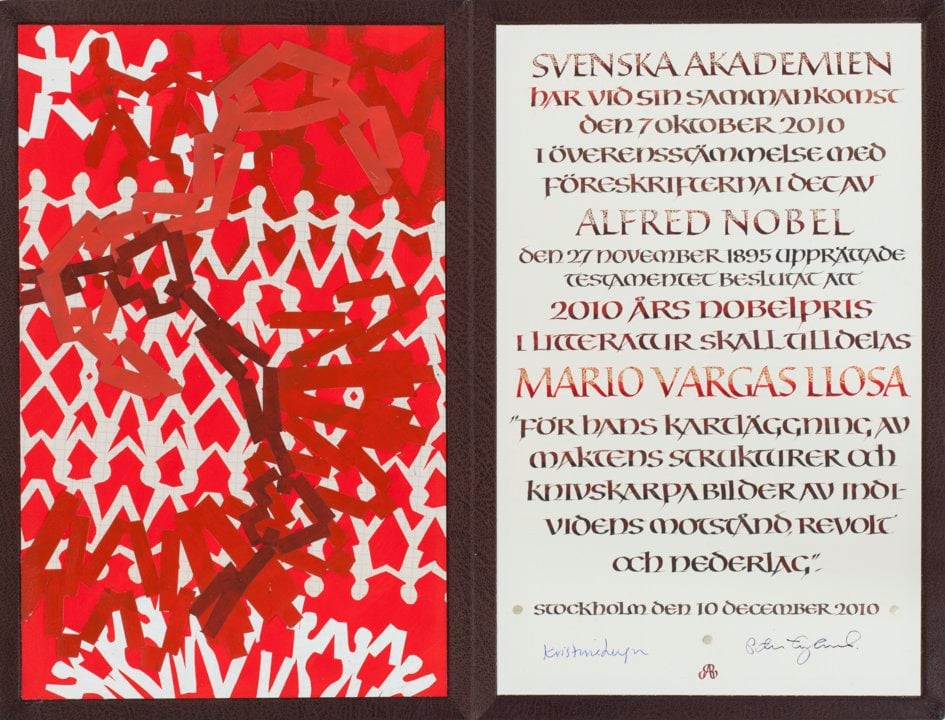
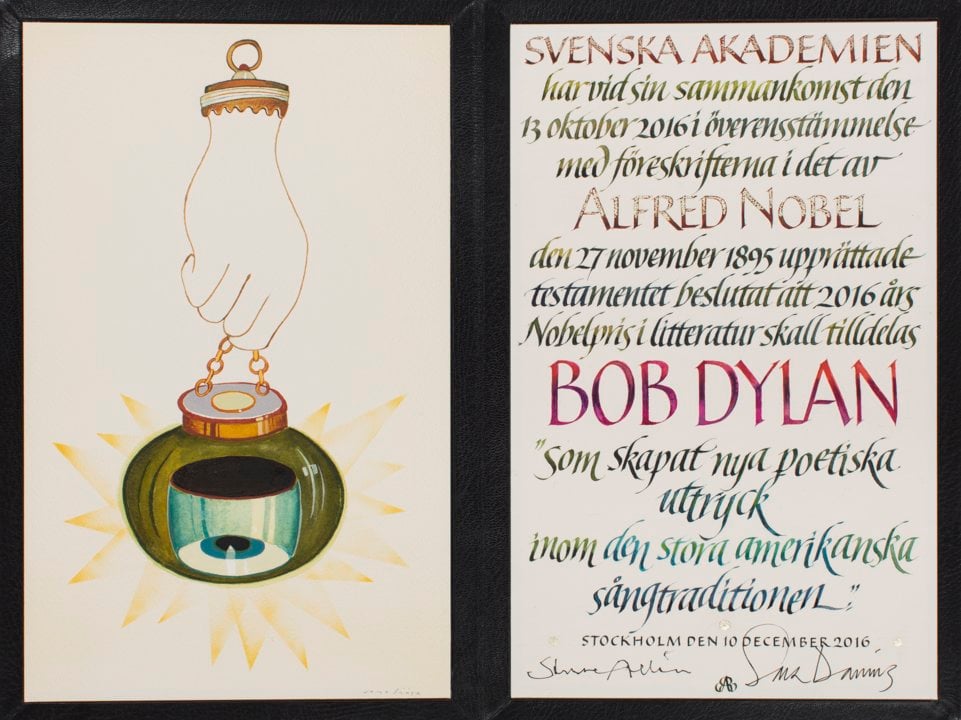
Học viện Thụy Điển đứng sau những tấm bằng giải Văn học đầy bay bổng. Họ luôn ưu tiên thiết kế cá nhân hóa để cố gắng cô đọng lại bầu không khí, tinh thần cũng như phong cách sáng tác của từng tác giả. Vì danh tính người đạt giải chỉ được công bố vào giữa tháng 10 mà thành phẩm phải hoàn thiện trước ngày 10 tháng 12, các họa sĩ chỉ có khoảng vài tuần ngắn ngủi để nghiên cứu toàn bộ sự nghiệp của một nhà văn và biến nó thành tranh vẽ. Năm 1986, Wole Soyinka của Nigeria trở thành người châu Phi đầu tiên nhận giải Nobel Văn học, tấm bằng của ông mang đậm những nhịp điệu rộn ràng, các nghi lễ huyền bí và khát vọng đấu tranh giải phóng. Xu hướng nghệ thuật ấn tượng này cũng xuất hiện trên bằng của Doris Lessing (2007, họa sĩ Karin Mamma Andersson), Mario Vargas Llosa (2010, họa sĩ John Stenborg), và Bob Dylan (2016, họa sĩ Jens Fänge).
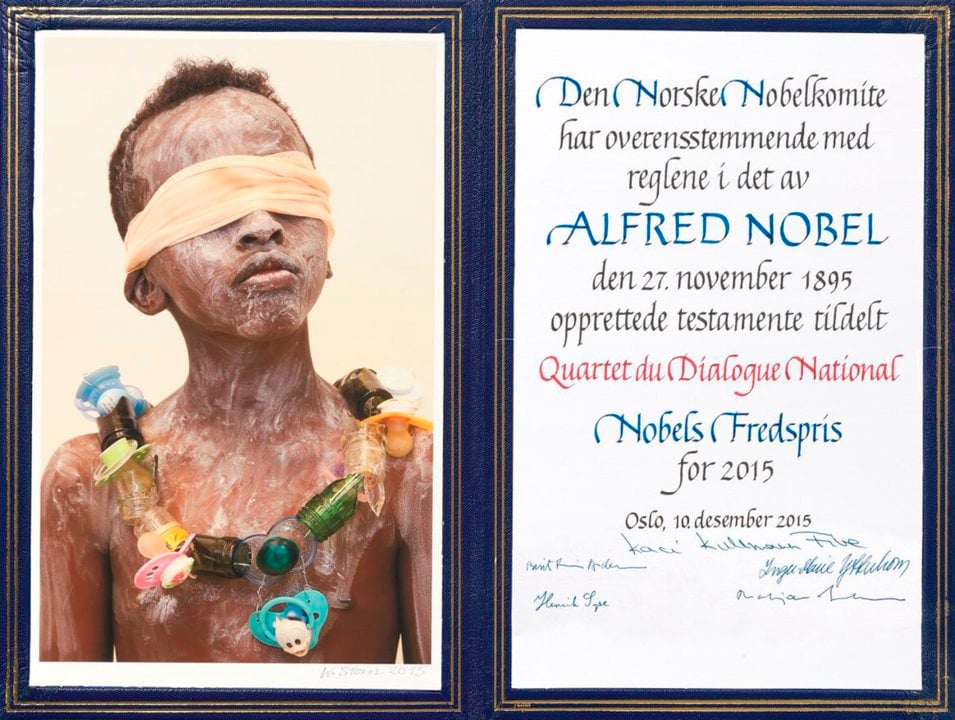
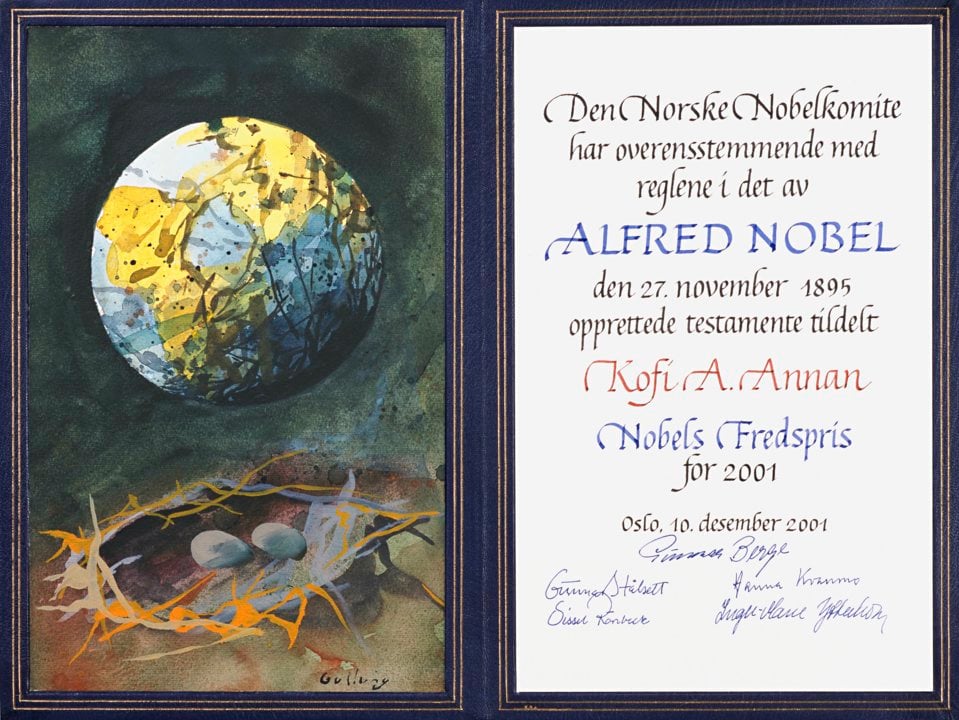
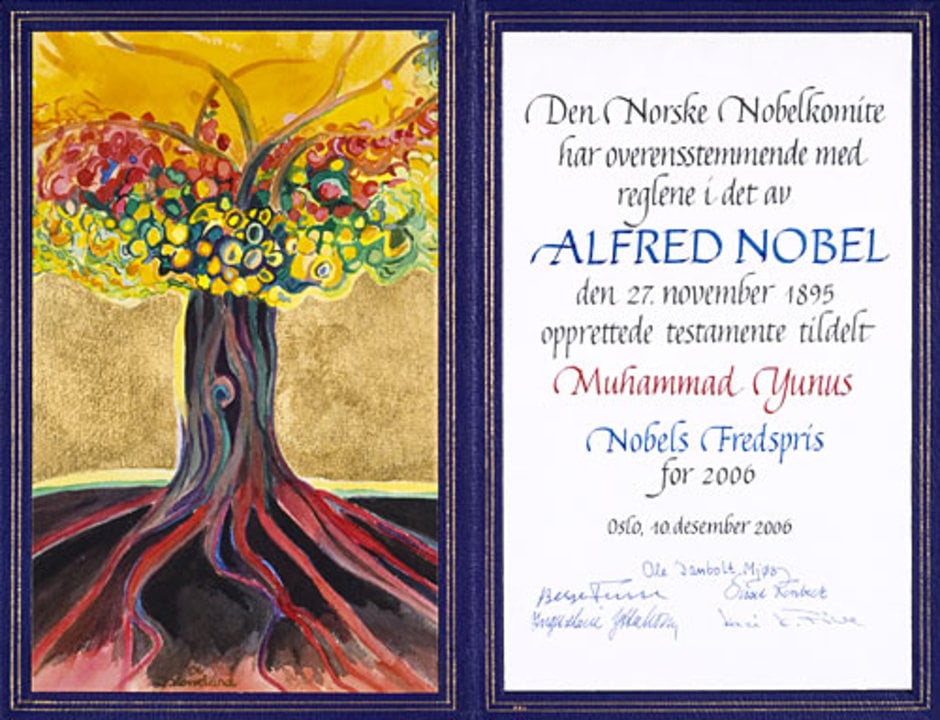
Ủy ban Nobel Na Uy phụ trách thiết kế văn bằng cho giải Nobel Hòa bình. Cho đến trước năm 1990, các tấm bằng này cũng được thiết kế riêng nhằm kết nối sâu sắc với người nhận, chẳng hạn như bằng của Bộ tứ Đối thoại Quốc gia Tunisia (2015, họa sĩ Willibald Storn), Kofi Annan (2001, họa sĩ Håkon Gullvåg), hay Muhammad Yunus (2006, họa sĩ Jarle Rosseland).
Để tìm hiểu thêm thông tin chi tiết về toàn bộ các họa sĩ và nghệ sĩ thư pháp đã tham gia vào các dự án này, bạn có thể tham khảo www.nobelprize.org/uploads/2026/01/register-of-artists-and-calligraphers-2025.pdf.
Every single Nobel Prize diploma is way more than just a certificate—it’s a completely unique, custom-tailored work of art. The exact design specs are left entirely up to the specific prize-awarding bodies. For instance, the Literature diploma is meticulously crafted on parchment (a specially treated leather) using techniques that throw it all the way back to medieval book illustrators. On the flip side, diplomas for the other categories are produced on custom-ordered, handmade paper.
From a design perspective, the artistic style of these diplomas gets a fresh look every year, but the typography always follows a strict, time-honored layout in either Swedish or Norwegian. The Swedish-awarded diplomas feature the laureate’s name along with a brief citation explaining exactly why they’re being honored. Meanwhile, the Norwegian Peace Prize diplomas have a clean look and have actually never included a citation.
The obsession with detail during the finishing stage is absolutely next-level, especially when it comes to the covers. For the Physiology or Medicine diploma, a Nobel relief made entirely of leather is attached directly to the surface. After tons of careful prep work, master bookbinders mount each diploma into a gorgeous cover made from premium goatskin leather. The color palette is strictly designated by field:
- Physics: A sleek dark blue leather cover.
- Chemistry: A vibrant red leather cover.
- Physiology or Medicine: A rich burgundy leather cover.
- Economic Sciences: A deep dark brown leather cover.
- Literature: A classic blue leather cover.
But wait, it gets even better! Calligraphers design exclusive, custom gold monograms for each laureate, which are featured on the outside of the diploma and on the storage boxes. These protective boxes are crafted from a gray woven paperboard and lined with super-soft pigskin suede on the inside. The standard size for every Nobel Prize diploma is a perfectly proportioned 23 x 35 cm.
Looking back at the design history of the various awarding institutions reveals some fascinating creative vibes:
The Royal Swedish Academy of Sciences handles the diplomas for Physics, Chemistry, and, since 1969, Economic Sciences. Their design direction usually revolves around a beautifully coordinated annual theme—think birds, flowers, or delicate vases—rather than being personalized to the individual winner. Since 1988, all the stunning hand-lettered text on these diplomas has been crafted by the renowned calligrapher Annika Rücker. Some standout pieces include the diplomas for David J. Thouless (2015, featuring art by Ingela Berntsson), Theodor W. Hänsch (2005, art by Ingegerd Möller), Eric Cornell (2001, art by Nils G. Stenqvist), and the gorgeous Chemistry diplomas for Kurt Wüthrich (2002), Jacques Dubochet, and Tomas Lindahl.
The Nobel Assembly at Karolinska Institutet oversees the Physiology or Medicine diplomas. Back between 1901 and 1964, these diplomas were packed with rich, elaborate fine art illustrations. But starting in 1965, the layout took a minimalist turn, featuring a crisp gold medal in relief paired with elegant calligraphic text. Since 1990, this beautiful lettering has been meticulously hand-drawn by calligrapher Susan Duvnäs, beautifully showcased on diplomas for Elizabeth H. Blackburn (2009), Tu Youyou (2015), and Yoshinori Ohsumi (2016).
The Swedish Academy brings an incredibly poetic energy to the Literature diplomas. They always prioritize deeply personalized designs that capture the unique atmosphere, spirit, and soul of each author’s life work. Because the winners aren’t announced until mid-October and everything must be absolutely flawless by December 10th, artists have only a tiny window of a few weeks to study a writer’s entire career and translate it into a visual masterpiece. In 1986, Wole Soyinka of Nigeria became the very first African laureate to win the Nobel Prize in Literature; his diploma radiates a powerful energy filled with throbbing rhythms, magical rites, and a fierce struggle for liberation. This breathtaking, expressive art style also shines through beautifully in the diplomas of Doris Lessing (2007, art by Karin Mamma Andersson), Mario Vargas Llosa (2010, art by John Stenborg), and Bob Dylan (2016, art by Jens Fänge).
The Norwegian Nobel Committee is the creative force behind the Nobel Peace Prize diplomas. Up until 1990, these diplomas were also uniquely designed to forge a deep, meaningful connection with the recipient—like the masterfully crafted diplomas for the Tunisian National Dialogue Quartet (2015, art by Willibald Storn), Kofi Annan (2001, art by Håkon Gullvåg), and Muhammad Yunus (2006, art by Jarle Rosseland).
To dive deeper into the complete lineup of incredibly talented artists and calligraphers who have lent their vision to these historic projects, check out the www.nobelprize.org/uploads/2026/01/register-of-artists-and-calligraphers-2025.pdf.