
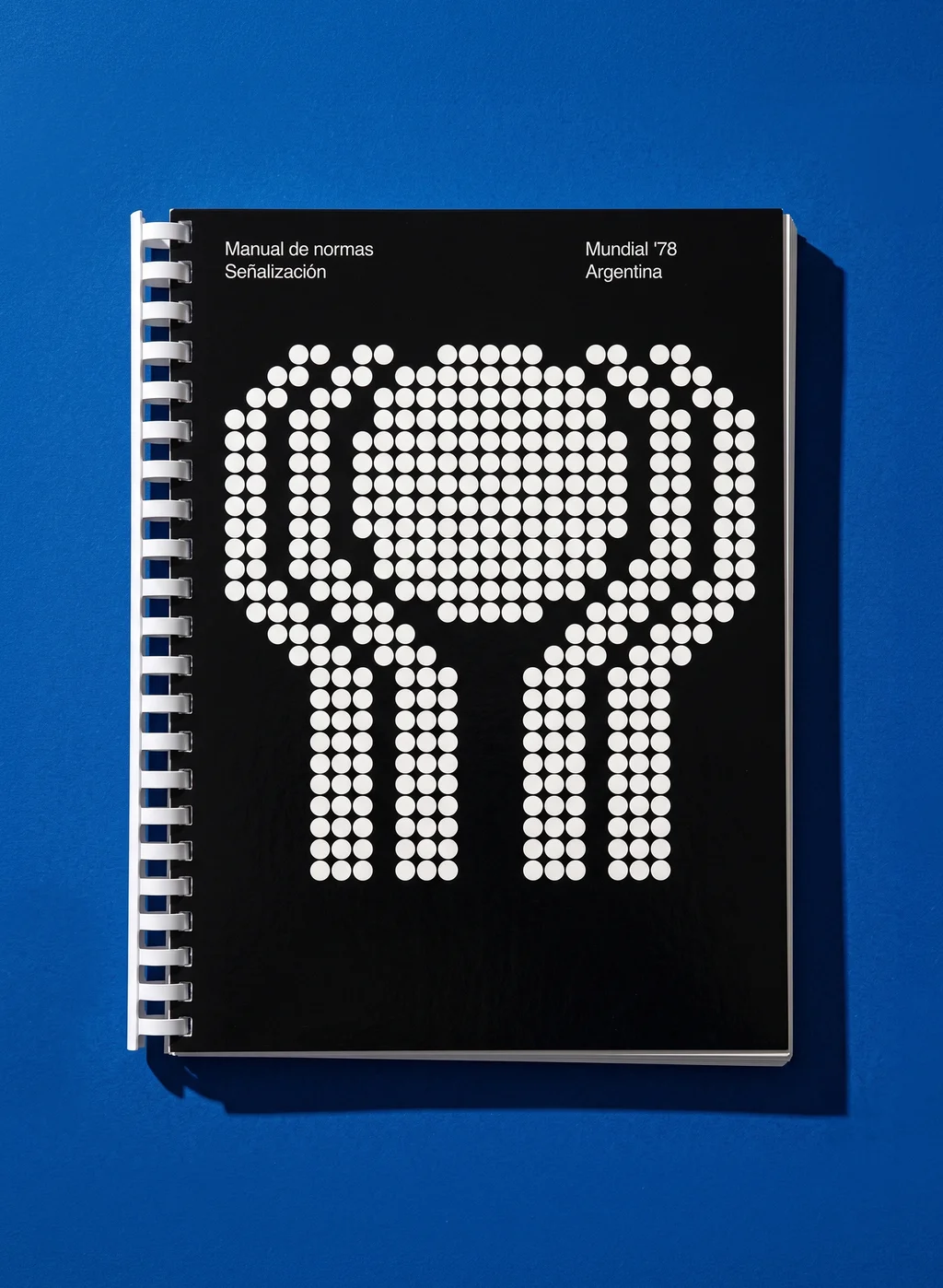

When thinking about design for massive sporting events like the World Cup, logos and cute mascots usually steal the spotlight. However, the signage and wayfinding system for the 1978 World Cup in Argentina is a fascinating, super practical masterclass in design that many people have completely overlooked.
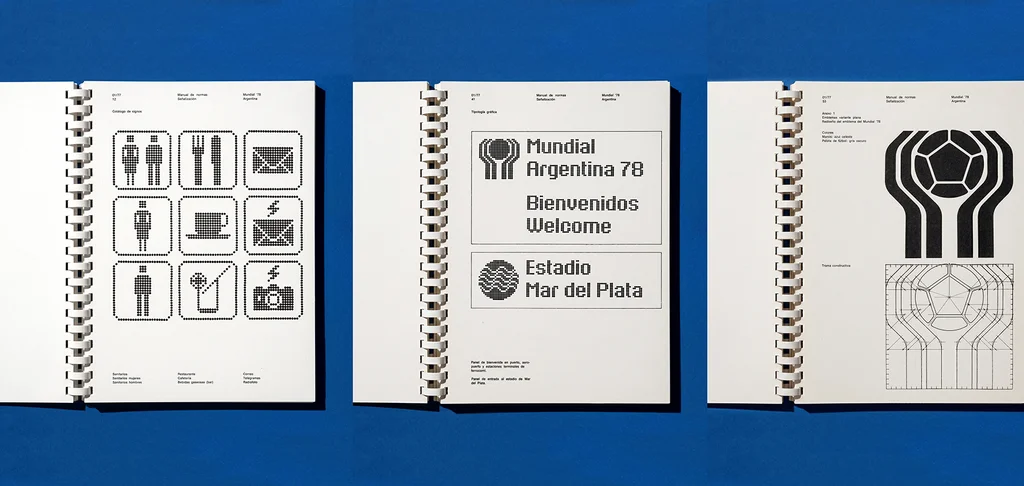
Dubbed “Puntograma” (which translates to “dot-a-gram” or “point-a-gram”), this brilliant system was developed by designer Gustavo Pedroza at MM/B studio. What makes Puntograma so special is its incredibly smart, pre-digital grid-based and modular approach. Instead of dealing with complex printing, the system relied on dark green perforated steel panels as the backdrop. Workers on-site would snap white polypropylene buttons into the holes following specific templates to spell out letters, shapes, and pictograms. Red buttons were reserved strictly for warning signs. This setup was highly legible, completely scalable, and remarkably cost-effective, allowing crew members across six stadiums to easily assemble everything by hand.
Even though this was Argentina’s very first large-scale systematic design solution, Puntograma was largely forgotten for decades. Part of this collective amnesia stems from the country’s historical backdrop under a military dictatorship that lasted until 1983, leaving a strong desire to leave the past behind. On top of that, the original standards manual was never commercially published; only 100 copies were ever printed, distributed directly to the technicians out in the field.
To celebrate and bring this ingenious design thinking back to the creative community, publisher Flecha Books has released a gorgeous facsimile reissue of the original standards manual. The publication stays faithful to the original A4 size, spans 124 pages, features a classic plastic comb binding, and is printed on premium paper stock. This bilingual English-Spanish edition captures the magic of how a tiny design team built a system that guided millions of visitors across a massive country—perfectly channeling the systematic design principles born in Ulm and passed down from the legendary Otl Aicher.
Khi nhắc đến thiết kế cho các sự kiện thể thao lớn như World Cup, người ta thường nghĩ ngay đến những chiếc logo hay linh vật biểu tượng. Thế nhưng, hệ thống biển báo và chỉ dẫn (signage & wayfinding) tại kỳ World Cup 1978 diễn ra ở Argentina lại là một câu chuyện thiết kế cực kỳ thú vị và thiết thực mà có thể nhiều người đã vô tình bỏ quên.
Hệ thống này có tên gọi là Puntograma (có thể hiểu là dot-a-gram hoặc point-a-gram), do designer Gustavo Pedroza phát triển tại MM/B studio. Điểm độc đáo của Puntograma nằm ở chỗ nó là một giải pháp thiết kế dạng lưới (grid-based) và lắp ghép module (modular) rất thông minh trong kỷ nguyên pre-digital. Thay vì in ấn phức tạp, hệ thống sử dụng các tấm thép đục lỗ màu xanh lá đậm làm nền, sau đó các nhân viên sẽ gắn các nút nhựa polypropylene màu trắng vào các lỗ theo sơ đồ để tạo thành chữ cái, hình khối và biểu tượng (pictograms). Những nút màu đỏ sẽ được dành riêng cho các thông tin mang tính cảnh báo. Cách làm này vừa dễ đọc, dễ tùy biến kích thước mà lại vô cùng tiết kiệm, giúp công nhân tại 6 sân vận động có thể tự tay lắp ráp một cách nhanh chóng.
Dù là một giải pháp systematic design quy mô lớn đầu tiên của Argentina, hệ thống Puntograma lại bị lãng quên trong suốt một thời gian dài. Điều này một phần xuất phát từ bối cảnh lịch sử dưới chế độ độc tài quân sự kéo dài đến năm 1983, khiến nhiều người có tâm lý muốn để quá khứ lại phía sau. Bên cạnh đó, cuốn cẩm nang tiêu chuẩn (standards manual) hướng dẫn lắp đặt khi ấy chỉ được in vỏn vẹn 100 bản để phát thẳng cho các kỹ thuật viên ngoài công trường chứ chưa từng được xuất bản thương mại.
Nhằm tôn vinh và chia sẻ tư duy thiết kế tài tình này đến cộng đồng sáng tạo, nhà xuất bản Flecha Books đã quyết định tái bản lại cuốn cẩm nang gốc dưới dạng facsimile (sách mô phỏng nguyên bản thiết kế gốc). Ấn phẩm này giữ nguyên khổ A4, dày 124 trang, đóng gáy lò xo nhựa comb-bound cổ điển và sử dụng chất liệu giấy cao cấp. Với nội dung song ngữ Anh – Tây Ban Nha, cuốn sách ghi lại chi tiết cách một đội ngũ thiết kế nhỏ gọn đã tạo ra những sản phẩm dẫn đường cho hàng triệu du khách di chuyển qua một quốc gia rộng lớn, kế thừa hoàn hảo tư duy thiết kế hệ thống từ trường phái Ulm và nhà thiết kế huyền thoại Otl Aicher.